
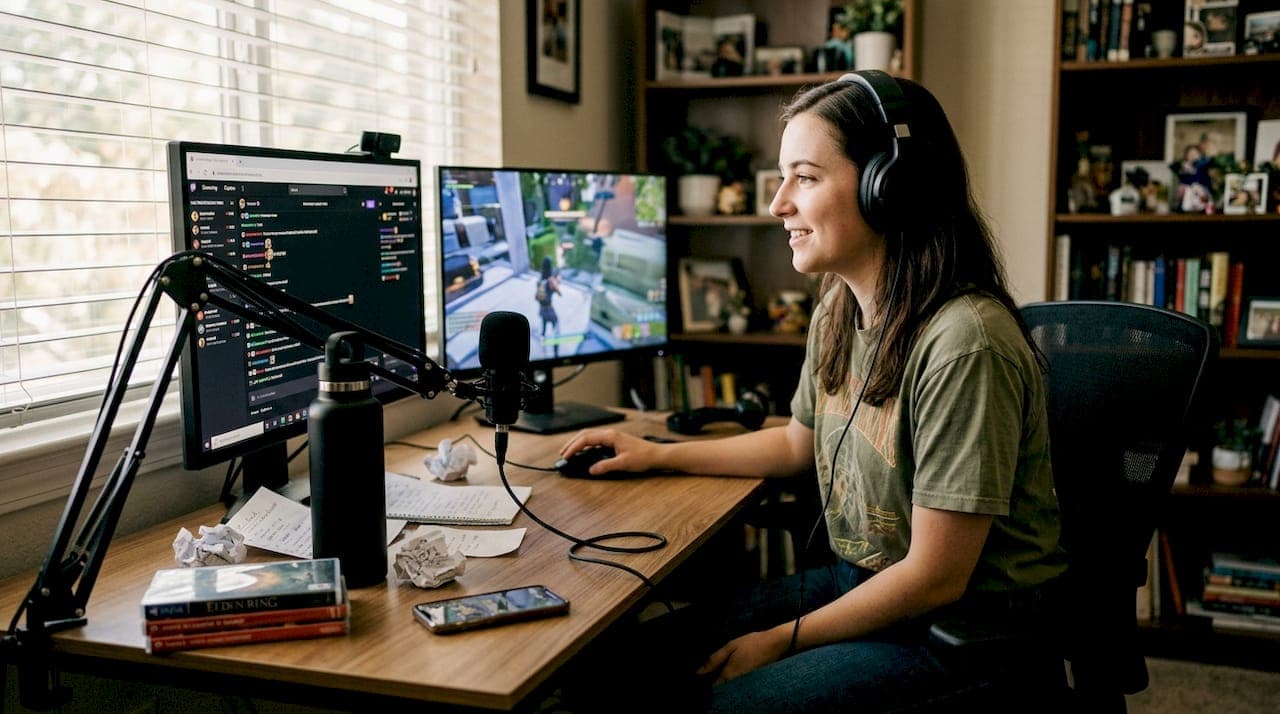
Most people assume watching a live stream is a solo activity. You tune in, watch someone play a game or perform music, and move on. But that picture misses the point entirely. Live streaming communities are active, social spaces where creators and viewers shape each other's experience in real time. Whether you stream games, host music sets, or watch IRL content, you are already part of something bigger. This guide breaks down what these communities are, how they function across different content sectors, and why understanding them gives both creators and viewers a real advantage.
Table of Contents
- What is a live streaming community?
- Key mechanics that power streaming communities
- How live streaming communities differ across gaming, entertainment, and music
- Scale and impact: Why live streaming communities matter
- Challenges and the future: Moderation, platform shifts, and AI disruption
- Build and join thriving streaming communities with VexioTV
- Frequently asked questions
Key Takeaways
| Point | Details |
|---|---|
| Interactive engagement | Real-time chat and rituals transform passive viewers into active community members. |
| Sector-specific dynamics | Gaming, music, and entertainment communities each foster unique rituals and audience bonds. |
| Healthy moderation is essential | Proactive community rules and rituals reduce toxicity and encourage connection. |
| Community drives growth | Stronger communities mean higher viewer retention, monetization, and satisfaction. |
What is a live streaming community?
Now that we've set the stage, let's define exactly what makes these communities unique.
Live streaming communities are not just audiences. They are interactive groups built around shared viewing and creation. As one source puts it, live streaming communities are interactive groups of content creators and viewers that form around real-time broadcasts on platforms like Twitch, YouTube Live, and TikTok Live.
These communities exist across three main content sectors:
- Gaming: Viewers watch and react to gameplay, often influencing decisions in real time.
- Entertainment: Creators share IRL moments, talk shows, or creative performances that build personal connection.
- Music: Artists perform live sets and acknowledge fans directly, creating a shared concert-like experience.
What separates a live streaming community from a regular audience is the feeling of co-performance. Viewers are not passive. They chat, vote, donate, and participate in rituals that become part of the stream's identity. A channel's inside jokes, recurring memes, and shared language are all signs of a real community forming.
Twitch alone hosts over 240 million monthly active users, showing just how large and active these communities have become globally.
The creator and viewer dynamic is central here. Creators set the tone, but viewers shape the culture. That back-and-forth is what makes live streaming communities distinct from pre-recorded content.
Key mechanics that power streaming communities
With a clear definition in mind, the next step is understanding what really brings these communities to life.
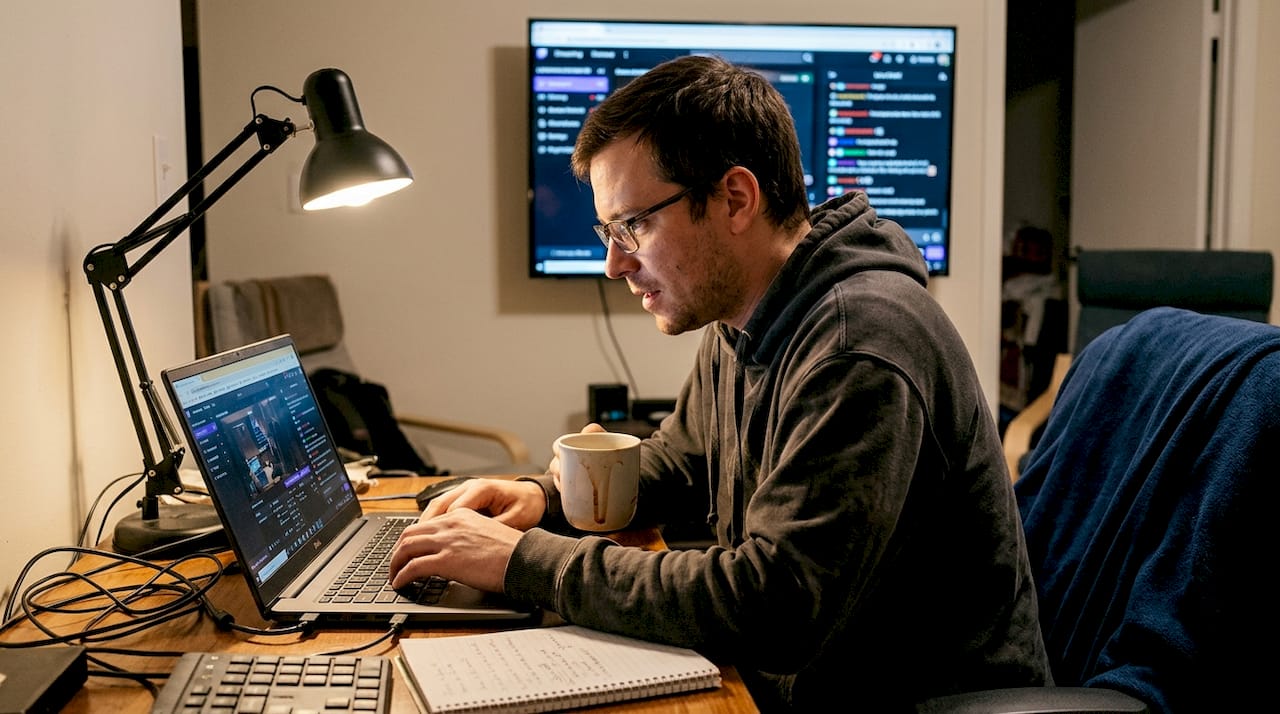
Real-time interactions via chat, polls, donations, and rituals fuel community engagement. Here are the core mechanics that make it work:
- Live chat: The most immediate tool. Viewers comment, react, and talk to each other during the stream. Fast-moving chat signals a healthy, active community.
- Polls and votes: Creators use these to let viewers influence content decisions, from game choices to topics discussed.
- Donations and subscriptions: Financial support creates a visible hierarchy of loyal fans and rewards creators for consistent output.
- Emotes and inside language: Custom emotes and recurring phrases become community shorthand. They signal belonging.
- Raids: When a creator sends their audience to another channel at the end of a stream, it builds cross-community relationships and introduces new viewers.
- Discord servers: Discord and Slack integrations extend community life beyond the stream itself. Fans stay connected between broadcasts, keeping engagement high.
These mechanics do not just entertain. They create habitual participation. Viewers return because they feel invested, not just entertained.
Pro Tip: Pick one recurring ritual and stick to it every stream. It could be a weekly challenge, a specific greeting, or a running joke. Consistent rituals give viewers a reason to come back and something to look forward to.
How live streaming communities differ across gaming, entertainment, and music
But not all live streaming communities operate the same, especially across different content genres.
In gaming, communities thrive on gameplay and spectator interaction. Music prioritizes real-time performance and acknowledgments. Entertainment leans on authenticity and FOMO. Each sector has its own culture, and creators need to understand those differences.
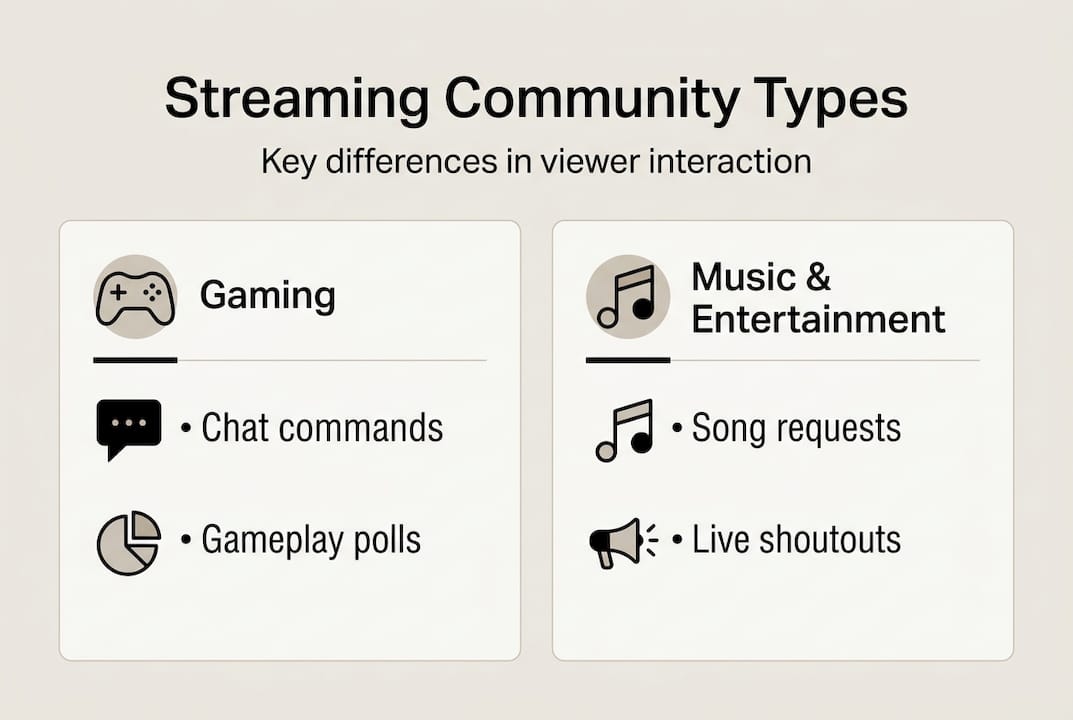
| Sector | Typical content | Common rituals | Chat culture | Community longevity |
|---|---|---|---|---|
| Gaming | Gameplay, tournaments, walkthroughs | Hype trains, challenge votes | Fast, meme-heavy | High, tied to game cycles |
| Music | Live sets, jam sessions, listening parties | Song requests, shoutouts | Supportive, lyric-focused | Moderate, tied to artist activity |
| Entertainment | Talk shows, IRL streams, creative content | Recurring segments, Q&A | Conversational, personal | Variable, depends on consistency |
Viewers in each sector have different expectations:
- Gaming viewers want to feel like they influence the game or challenge the creator.
- Music viewers want acknowledgment and a shared performance experience.
- Entertainment viewers want authenticity and a sense of being part of the creator's daily life.
For creators, this means your community-building approach must match your content type. A gaming streamer who ignores chat during a tense match may frustrate viewers. A music streamer who skips song requests loses a key engagement tool. Tailor your approach to your sector, and check out how gaming community platforms structure their engagement models for reference.
Scale and impact: Why live streaming communities matter
Understanding the variations, let's look at the numbers behind why these communities matter so much.
Twitch alone averages 35 million daily active users. Engaged communities drive higher retention and monetization across the board. These are not small numbers.
| Metric | Stat |
|---|---|
| Twitch monthly active users | 240 million+ |
| Twitch daily active users | 35 million |
| Average concurrent viewers | 2.3 million |
| Hours watched per day (Twitch) | 60 million+ |
These figures reflect a broader trend. According to streaming platform stats, live streaming viewership continues to grow year over year, with TikTok Live gaining ground on established platforms like Twitch and YouTube Live.
Why do these numbers matter for you? More engagement means better monetization. Creators with active communities earn more from subscriptions, donations, and brand deals. Viewers in active communities spend more time on platform and return more often. The relationship is direct: stronger community equals stronger results.
One surprising data point is average session length. Viewers in highly engaged communities watch significantly longer than those in passive audiences. That time translates directly into revenue and platform visibility for creators.
Challenges and the future: Moderation, platform shifts, and AI disruption
As streaming communities become essential for creators and fans, they are also facing new and complex challenges.
Moderation and rituals are critical for scalable, safe communities. AI-generated content and platform fragmentation present new challenges that creators and viewers need to understand.
Here are the top challenges facing live streaming communities right now:
- Toxicity in chat: Unmoderated chats can drive away new viewers and damage a creator's reputation quickly.
- Platform migration: When platforms change policies or lose popularity, communities must move. That transition often breaks momentum and loses members.
- AI-generated content: Automated bots and AI-generated streams blur the line between real and fake communities, making trust harder to build.
- Fragmentation: Audiences split across multiple platforms, making it harder to maintain a single, cohesive community.
Stream moderation research shows that communities without active moderation see higher rates of viewer drop-off and creator burnout, reinforcing that safety and structure are not optional.
These challenges are real, but they are manageable with the right approach.
Pro Tip: Appoint trusted community members as moderators early. Give them clear guidelines on what behavior is acceptable. A well-moderated chat keeps new viewers comfortable and signals that the creator takes their community seriously.
Build and join thriving streaming communities with VexioTV
Ready to put these lessons into practice? Here is how you can experience vibrant streaming communities yourself.
VexioTV is built for exactly this kind of community-driven live streaming. Creators can go live with one click, engage viewers in real time, and build the rituals and connections that turn casual viewers into loyal fans. Whether you stream gaming sessions, music performances, or entertainment content, the platform supports the mechanics that make communities work.
Viewers can explore real-time streaming clips to find creators worth following, while creators get the tools to monetize their streams and grow their audience. The VexioTV platform is designed to support both sides of the community equation. Sign up, go live, and start building.
Frequently asked questions
What makes a great live streaming community?
A great community is interactive, well-moderated, and built on unique rituals that foster belonging. Without moderation and rituals, toxicity erodes the sense of community over time.
Which platforms have the largest live streaming communities?
Twitch, YouTube Live, and TikTok Live host the largest communities. Twitch leads with over 240 million monthly active users and 35 million daily active users globally.
How do viewers participate in live streaming communities?
Viewers engage through chat, polls, donations, and emotes during streams. Many also join off-platform spaces like Discord, where real-time interactions continue between broadcasts.
What challenges do live streaming communities face?
The main challenges are toxicity, platform migration, and disruptions from AI-generated content. Moderation and clear community rituals are the most effective tools for keeping communities stable and safe.