
TL;DR:
- Streaming offers on-demand access, device flexibility, and lower costs, surpassing traditional cable.
- Exclusive content and personalized recommendations are key factors that retain streaming subscribers.
- Live streaming fosters real-time community interaction, driving engagement and shared experiences.
Streaming is popular, but not for the reasons most people assume. Convenience gets all the credit, yet the real drivers run deeper. 83% of US adults now use streaming services, while traditional cable keeps losing ground. That shift is not just about watching what you want, when you want. It is about personalization, community, exclusive content, and the pull of real-time shared experiences. This article breaks down the key forces behind streaming's rise across gaming, music, and creative content, so you can understand what is actually fueling the boom.
Table of Contents
- The foundations: Convenience, access, and affordability
- Exclusive content and personalization: The pull factors
- Community, interactivity, and the rise of live streaming
- Personalization and discovery in music and creative content
- The cost equation: Subscription churn, ad models, and the future
- Why the real reason streaming wins isn't just technology
- Explore even more with VexioTV
- Frequently asked questions
Key Takeaways
| Point | Details |
|---|---|
| Convenience and access | Streaming wins over cable with instant, on-demand content anytime, anywhere. |
| Exclusive content draws users | Original shows, music, and live events drive subscriptions and loyalty. |
| Live and community-driven | Interactivity and real-time engagement set streaming apart from passive watching. |
| Personalization shapes discovery | Smart recommendations and custom playlists keep users coming back. |
| Cost and fatigue | Rising prices and ad annoyance push users to reconsider their subscriptions. |
The foundations: Convenience, access, and affordability
The basics still matter. Streaming removed friction from entertainment. No installation appointments. No channel bundles you did not ask for. No fixed schedules. You open an app and watch.
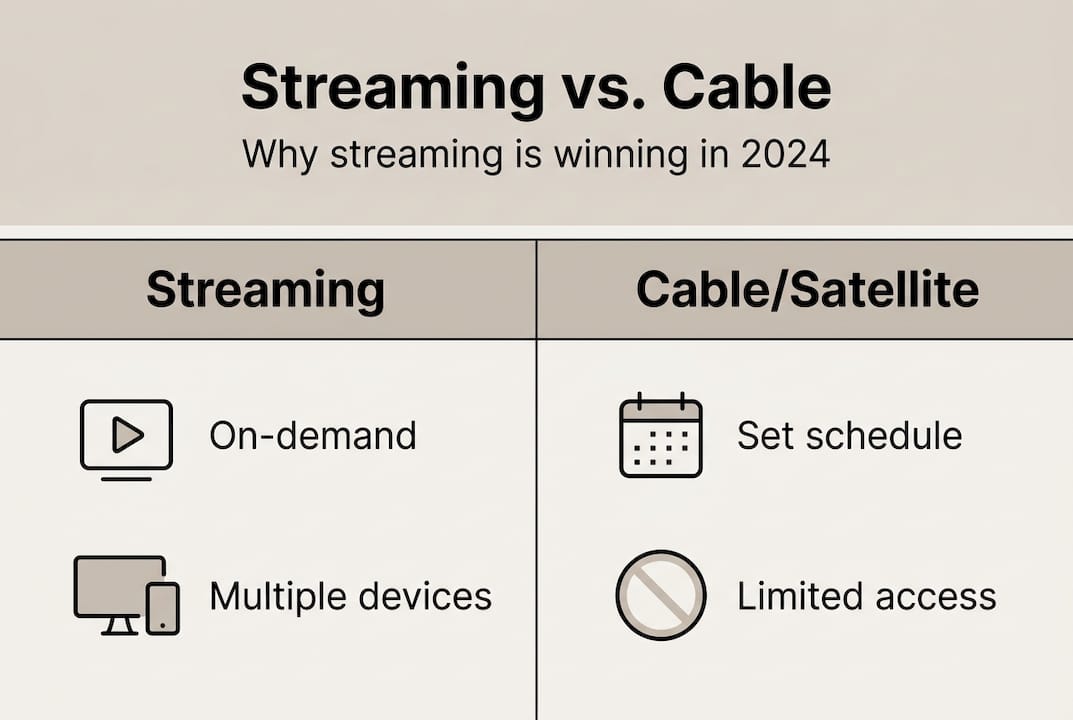
83% of US adults use streaming services today, compared to a shrinking share still paying for cable or satellite TV. That gap keeps widening. On-demand access changed how people think about entertainment entirely. Binge-watching became a normal behavior, not a novelty. Watching across phones, tablets, smart TVs, and laptops made content fit any lifestyle.
Content libraries also expanded fast. Platforms now carry thousands of titles across genres, languages, and formats. Niche interests that cable ignored, such as anime, indie music, and regional sports, found dedicated homes online.
Here is what makes convenience-driven media consumption work:
- Watch on any device, anywhere with internet access
- No contracts or long-term commitments required
- Pause, rewind, and resume content at any time
- Access global content without geographic restrictions
- Start watching immediately after subscribing
Stat to know: 83% of US adults use streaming services. Cable and satellite TV subscriptions continue to fall each year.
| Feature | Streaming | Cable/Satellite TV |
|---|---|---|
| Access | On-demand, anytime | Scheduled programming |
| Device flexibility | All devices | TV-dependent |
| Content variety | Thousands of titles | Limited channel lineup |
| Cost | $8 to $20/month typical | $80 to $150+/month typical |
| Contracts | None or monthly | Often 1 to 2 year contracts |
| Niche content | Widely available | Rarely covered |
The cost difference alone explains a lot. Streaming gives more choice at a fraction of the price. That value proposition is hard to argue with.
Exclusive content and personalization: The pull factors
Convenience gets people to sign up. Exclusive content keeps them there. Platforms invest heavily in original programming because it gives subscribers a reason to stay that no competitor can replicate.
48.6% of subscribers cite exclusive or original content as a primary reason for choosing a platform. That number reflects a real behavioral shift. People do not just want access to content. They want content they cannot get anywhere else.
Personalization reinforces that pull. Algorithms track what you watch, how long you watch it, and what you skip. They use that data to surface content you are likely to enjoy next. This creates a feedback loop that keeps engagement high.
Here is how platforms personalize experiences for users:
- Track viewing history to understand individual preferences
- Analyze completion rates to identify content that holds attention
- Suggest similar titles based on genre, tone, and format
- Highlight trending content to create shared cultural moments
- Curate personalized homepages so every user sees a different interface
Viral moments also play a role. When a show dominates social media, people subscribe just to participate in the conversation. Platforms benefit from that cultural gravity without paying for advertising.
Pro Tip: Do not ignore the "because you watched" rows on any streaming platform. Those algorithmic suggestions often surface hidden gems that match your taste better than top-ten lists do.
| Reason for subscribing | % of users citing it |
|---|---|
| Exclusive/original content | 48.6% |
| Price and value | 38.2% |
| Personalized recommendations | 29.7% |
| Variety of content | 27.4% |
| Family or household sharing | 21.1% |
Personalization and exclusivity work together. One draws you in. The other makes leaving feel like a loss.
Community, interactivity, and the rise of live streaming
Beyond on-demand content, the streaming boom is being fueled by something unique: real-time interaction and community. Live streaming is not just watching. It is participating.
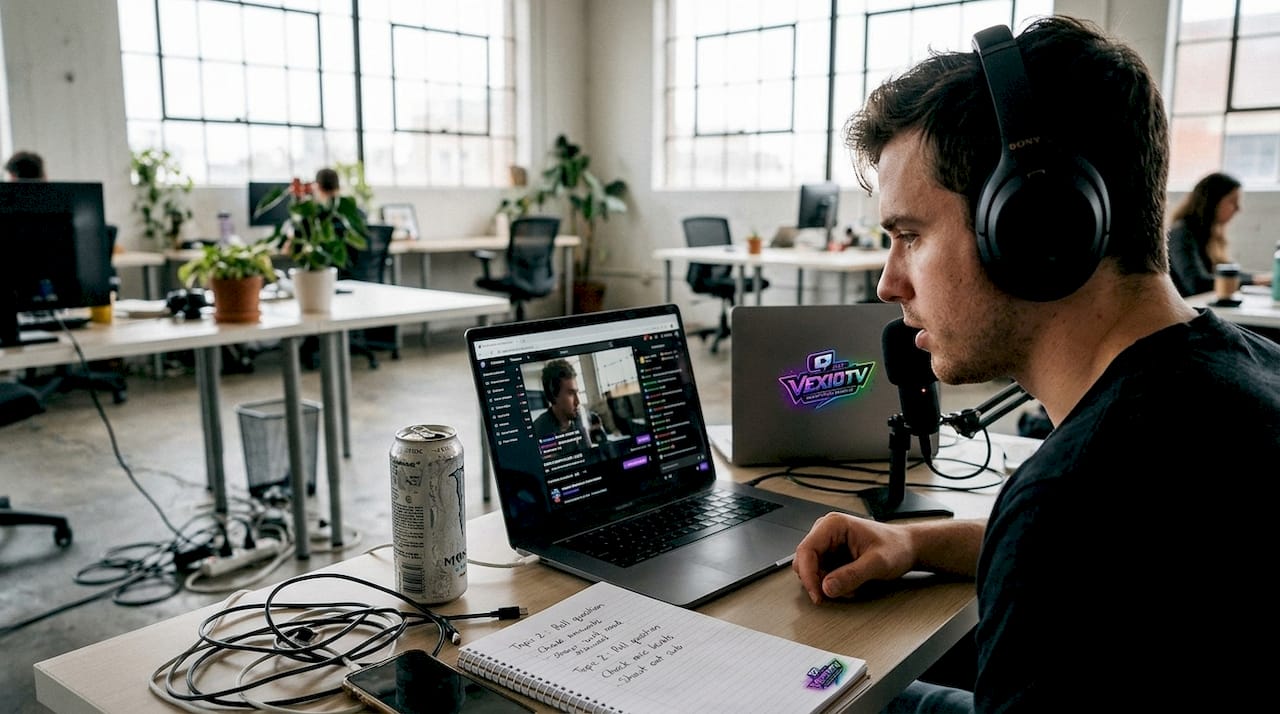
Twitch and Kick combined for 9.6 billion hours watched in Q3 2025 alone. That scale shows live streaming is not a niche activity. It is a mainstream entertainment format. Gaming drives a large share of that viewership, but music, IRL content, and creative performances are growing fast.
What sets live streaming apart from recorded content:
- Real-time chat lets viewers react and interact as events unfold
- Parasocial bonds form between streamers and regular viewers
- Shared reactions create a sense of collective experience
- Viewer participation through polls, donations, and channel points
- Unpredictability keeps content fresh and impossible to replicate
Those elements make live streaming communities feel different from any other media format. You are not just watching someone play a game. You are part of an event.
"Live streaming viewership reached 9.6 billion hours in Q3 2025 across Twitch and Kick, reflecting the sustained demand for real-time, interactive content."
Kick's creator-first approach has also pushed competition in the space, giving streamers better revenue splits and attracting creators who want more control. That competition benefits viewers too, since platforms keep improving features to retain both creators and audiences.
Pro Tip: If you stream live, respond to chat consistently in your first 30 minutes. Early engagement signals to new viewers that your stream is active and worth staying in.
Building an interactive stream setup does not require expensive equipment. Consistent interaction matters more than production quality for early growth.
Personalization and discovery in music and creative content
Just as gamers and creators go live for community, music and creative content lovers flock to streaming for endless discovery. The numbers here are significant.
Spotify reached 751 million monthly active users in early 2026, a record. Streaming now accounts for 67% of total music industry revenue globally. Those figures reflect how completely music consumption has shifted away from physical and download formats.
What drives loyalty on music and creative platforms:
- Algorithmic playlists like Discover Weekly surface artists users have never heard
- Mood and activity-based playlists match content to context
- Personalized year-in-review features like Spotify Wrapped create social sharing moments
- Podcast and audiobook integration expands the value of a single subscription
- Artist radio and similar-artist feeds extend listening sessions naturally
The discovery element is what keeps users engaged long-term. Finding a new favorite artist through a recommendation feels rewarding. Platforms that deliver that feeling consistently build strong retention.
Pro Tip: Use the radio feature on any music platform after a song or artist you enjoy. It is one of the fastest ways to find new music that fits your existing taste without spending time searching manually.
For creators, music streaming engagement ideas can help turn passive listeners into active community members. Discovery is just the entry point. Community keeps people coming back.
The cost equation: Subscription churn, ad models, and the future
While streaming keeps growing, not everything is perfect. Cost and ad fatigue shape user behavior and future trends in ways that platforms cannot ignore.
30% of streaming users cancel subscriptions primarily because of cost, not because of content quality. The average household now holds 5.8 streaming subscriptions. That adds up fast, and users are starting to notice.
Top reasons people leave streaming services:
- Monthly costs feel too high relative to how often they use the service
- Content overlap between platforms reduces the need for multiple subscriptions
- Ad interruptions on lower-tier plans frustrate users who expected a cleaner experience
- Password sharing restrictions push out users who relied on shared accounts
- Seasonal subscriptions where users sign up, finish a show, and cancel immediately
"Cost savings, not content dissatisfaction, is the primary driver of streaming churn. The average household subscribes to 5.8 SVOD services, creating real budget pressure." Parks Associates, 2025
Ad-supported tiers are now standard across most major platforms. They lower the entry price but introduce a tradeoff. Around 70% of users report frustration with ad frequency on these tiers. Platforms are working to balance ad load with user experience, but it remains a tension point.
Ad-supported streaming trends suggest the industry is moving toward hybrid models that combine limited ads with exclusive live events to justify subscription costs. Live sports rights are a major part of that strategy. The future of streaming may look more like traditional TV than many expected.
Why the real reason streaming wins isn't just technology
Most analysis of streaming growth focuses on technology: better algorithms, faster internet, smarter recommendations. That framing misses something important.
Streaming thrives because it taps into human needs for belonging and shared identity. A live stream chat during a major gaming event is not just entertainment. It is a social space. A Spotify Wrapped post is not just data. It is a statement about who you are.
Streaming is maturing toward a model that looks more like linear TV, with ads, live sports, and scheduled events. That shift is driven by profitability needs, but it also reflects something platforms learned: people want shared moments, not just personalized feeds.
Algorithms have limits. Recommendation systems create filter bubbles that narrow discovery over time. Users who rely entirely on algorithmic suggestions often miss content outside their established patterns. The platforms that grow long-term are the ones that balance personalization with exposure to new ideas and communities.
Technology enables streaming. Social connection sustains it. That distinction matters for anyone building in this space, whether as a creator, a platform, or a viewer looking to get more from the experience.
Explore even more with VexioTV
Ready to dive deeper into streaming? VexioTV connects creators and viewers across gaming, music, IRL content, and creative performances in one place.
Whether you want to go live for the first time or grow an existing audience, the VexioTV platform gives you the tools to stream, build community, and earn from your content. Browse practical guides on everything from music streaming tips to live audience engagement. Sign up, go live, and start building your streaming presence today.
Frequently asked questions
What makes streaming more popular than traditional cable TV?
Streaming offers on-demand access, device flexibility, and lower costs, which is why 83% of US adults now prefer it over cable. Cable cannot match that combination of value and convenience.
Why do people stick with multiple streaming services?
Viewers maintain several subscriptions primarily for exclusive content, since 48.6% cite original programming as their main reason for choosing a platform. Personalized recommendations also make each service feel distinct.
How does live streaming create stronger communities?
Live streaming enables real-time chat and direct interaction, which builds shared experiences that recorded content cannot replicate. Viewership hit 9.6 billion hours in Q3 2025 across Twitch and Kick, reflecting strong demand for that interactive format.
What drives people to cancel streaming subscriptions?
Cost is the main reason, not content. 30% of users cancel due to expense, and with the average household holding 5.8 subscriptions, budget pressure builds quickly.