
TL;DR:
- Chat significantly increases viewer engagement and retention during live streams.
- Interactive tools like polls, rituals, and custom emotes boost chat activity.
- Effective moderation ensures a positive environment that fosters community growth.
Interactive chat features drive 53% longer average session duration during live broadcasts. That single fact changes how you should think about your stream setup. Most creators focus on lighting, audio, and content planning. But the viewers who stay longest are not just watching. They are typing, reacting, and connecting with you and each other. This guide breaks down how chat works, why it matters, and how you can use it to turn passive viewers into active participants who keep coming back.
Table of Contents
- What makes chat a cornerstone of live streams?
- Key ways chat drives interaction and engagement
- Moderation and safety: Keeping chat healthy
- Turning viewers into a thriving community
- A fresh take: Why chat matters more than content quality
- Bring your live community to life with VexioTV
- Frequently asked questions
Key Takeaways
| Point | Details |
|---|---|
| Chat boosts engagement | Real-time chat increases viewer retention and active participation during live streams. |
| Interaction outperforms production | Streams with dynamic chat see higher loyalty than those focused solely on polished visuals. |
| Moderation is crucial | Effective tools and clear policies keep chat positive and encourage repeat participation. |
| Community emerges from chat | Shared rituals and collaboration in chat turn occasional viewers into a loyal community. |
What makes chat a cornerstone of live streams?
Chat is not a side feature. It is the core of what separates live streaming from pre-recorded video. When a viewer types a message and you respond, something shifts. They stop being an audience member and start being part of the event.
Real-time interaction in live chat boosts viewer retention and community building on platforms like Twitch and YouTube Live. That is not a coincidence. It reflects a basic behavior pattern: people stay where they feel seen.
Here is what chat enables that passive video cannot:
- Real-time reactions: Viewers respond to moments as they happen, creating shared experiences.
- Direct feedback: You can adjust your content mid-stream based on what chat tells you.
- Sense of belonging: Regulars recognize each other, develop inside jokes, and form bonds.
- Unique sessions: No two streams feel the same because the chat shapes each one differently.
This participatory dynamic is what builds live streaming communities over time. Viewers do not just return for your content. They return for the community they are part of.
The loyalty effect is measurable. Viewers who engage in chat watch significantly longer than those who do not. They are also more likely to subscribe, donate, and recommend your channel. Chat turns a one-way broadcast into a two-way experience, and that difference is what drives long-term channel growth.
For new streamers, this is good news. You do not need a massive production budget to build a loyal audience. You need to make people feel involved. Chat is the tool that makes that possible from day one.
Key ways chat drives interaction and engagement
Knowing chat matters is one thing. Understanding the specific mechanics that make it work is another. Let's look at what top streamers actually do to drive chat activity.
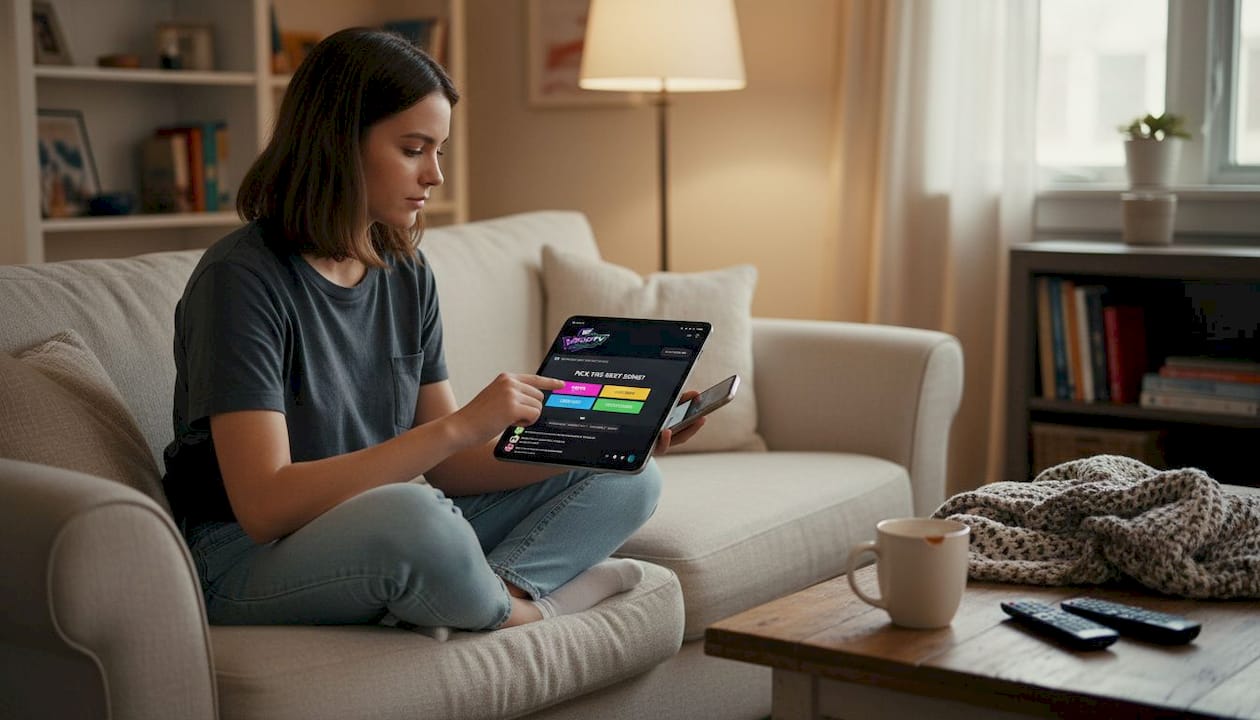
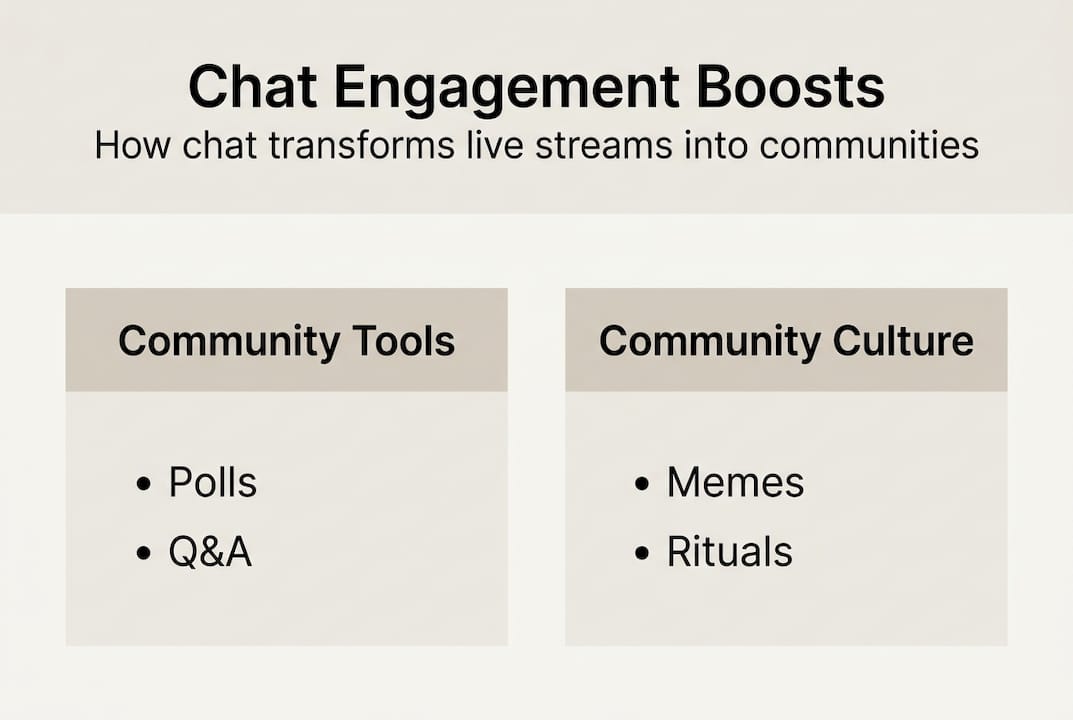
Polls and Q&A sessions are two of the most effective tools. Polls give viewers a direct vote in what happens next. Q&A sessions shift the focus to the audience, making them the center of the stream for a period. Both formats signal to viewers that their input has real weight.
Rituals and memes are equally powerful. When your community develops a recurring phrase, a custom emote response, or a greeting tradition, it creates an identity. New viewers notice it and want to learn it. Regulars feel a sense of ownership.
Here is a look at how chat engagement benchmarks compare across stream sizes:
| Stream tier | Messages per minute | Messages per viewer per hour |
|---|---|---|
| Top-tier streamers | ~100 messages/min | 3.2 messages |
| Mid-tier streamers | 20 to 50 | 1.5 to 2.5 |
| Small streamers | 2 to 10 | 0.5 to 1.5 |
These numbers give you a target to work toward. Even moving from 2 messages per minute to 10 represents a major shift in how active your community feels.
Two specific features stand out for boosting those numbers. Squad streams show 28% higher chat engagement, and custom emotes boost engagement by 40%. Both features give viewers more ways to express themselves and connect.
To build toward these benchmarks, consider this approach:
- Open every stream with a direct chat prompt, such as a simple question for viewers to answer.
- Acknowledge new followers or first-time chatters by name.
- Run a poll at least once per stream to let viewers shape what happens next.
- Create one or two recurring rituals that regulars can participate in each session.
- Introduce custom emotes as your channel grows to give your community a shared visual language.
Pro Tip: Review your chat logs after each stream. Look for the moments when activity spiked and ask yourself what triggered it. Repeat those patterns intentionally in your next broadcast.
For a full breakdown of how to structure your setup around these principles, the interactive stream setup guide covers the technical and behavioral side in detail.
Moderation and safety: Keeping chat healthy
A busy chat is only valuable if it stays positive. Toxic or chaotic chat drives viewers away, especially newcomers who have not yet built loyalty to your channel. Moderation is not optional. It is part of the product you offer.
Moderation tools include slow mode, blocked words, AutoMod, subscriber-only chat, and human or AI moderators. AutoMod alone flags roughly 10% of Twitch messages before they appear in chat. That is a significant filter running in the background of every major stream.
Here is a comparison of the main moderation approaches:
| Tool | Best use case | Limitation |
|---|---|---|
| Slow mode | High-traffic streams | Reduces spontaneity |
| Blocked words | Filtering specific language | Requires ongoing updates |
| AutoMod | Automated content filtering | Can flag false positives |
| Subscriber-only chat | Protecting community spaces | Excludes new viewers |
| Human moderators | Nuanced judgment calls | Requires trusted volunteers |
Each tool serves a different purpose. Most successful streamers use a combination rather than relying on one method alone.
Transparency matters just as much as the tools themselves. 72% of Twitch users value transparent moderation policies. When viewers understand the rules and see them applied consistently, trust builds. When moderation feels arbitrary or invisible, it creates friction.
Best practices for a healthy chat environment:
- Post your chat rules clearly at the start of each stream.
- Appoint trusted community members as moderators before you need them.
- Address rule violations calmly and consistently, without drama.
- Review your blocked word list regularly to keep it current.
- Thank your moderators publicly so viewers see the team effort.
Pro Tip: Set up a short "chat rules" command that any viewer can trigger. This keeps expectations visible without you needing to repeat them manually.
For streamers doing IRL streaming and chat moderation, the challenge is greater because you cannot monitor chat as closely. In those cases, human moderators become especially important.
Turning viewers into a thriving community
Engagement is the first step. Community is the destination. The difference between a channel with active chat and a channel with a real community comes down to culture. Culture is built through repeated shared experiences.
Chat transforms passive viewing into collaborative experiences via polls, Q&A, and rituals, turning viewers into co-creators. That shift from viewer to co-creator is what makes a community feel like it belongs to everyone, not just the streamer.
Here are actionable ways to build that culture through chat:
- Create a greeting ritual. A specific phrase or emote that regulars use when they arrive signals belonging.
- Celebrate milestones publicly. When a viewer hits a certain watch streak or contribution level, acknowledge it in chat.
- Let chat make decisions. Give viewers real choices, such as which game to play next or which topic to cover.
- Encourage viewer-to-viewer interaction. Ask your chat to respond to each other, not just to you.
- Develop channel-specific language. Inside terms and references that only your community understands create a sense of exclusivity.
"The most loyal communities are the ones where viewers feel like they built something together. Chat is the construction site."
This progression from interaction to identity does not happen overnight. It builds across streams, week after week. The creators who see the strongest long-term growth are the ones who treat each session as a chance to deepen that shared culture.
The principles apply across content types. Whether you focus on gaming culture and streaming communities or music streaming engagement, the underlying dynamic is the same. Chat is the mechanism through which community forms.
A fresh take: Why chat matters more than content quality
Here is a perspective worth sitting with: a technically polished stream with low chat activity will almost always underperform a rougher stream with a lively, engaged chat.
Production value gets viewers in the door. Chat keeps them there. The creator who spends hours perfecting their overlay but never responds to chat is optimizing the wrong variable.
The more useful mindset shift is moving from "what should I perform?" to "how can my viewers shape this event?" When viewers feel like they influence what happens, they invest in the outcome. That investment is what drives return visits, word-of-mouth growth, and genuine loyalty.
Creators who treat chat as community focus in streaming rather than background noise consistently build stronger channels over time. The stream becomes a shared space, not a performance. That distinction matters more than camera quality or scene transitions ever will.
Bring your live community to life with VexioTV
Ready to put these principles into practice? VexioTV gives you a straightforward platform to go live, build interactive chat experiences, and grow your community from day one.
The VexioTV streaming platform is built for creators who want to focus on engagement, not technical setup. Go live with one click, manage your chat, and connect with viewers across gaming, music, IRL, and creative content. Whether you are just starting out or looking for a platform that supports your growth, VexioTV provides the tools to turn viewers into a real community. Sign up and start streaming today.
Frequently asked questions
What is the primary purpose of chat in live streams?
Chat enables real-time interaction between viewers and creators, fostering engagement and building community across platforms like Twitch and YouTube Live.
How can I keep chat safe and positive during a broadcast?
Use tools like slow mode, AutoMod, blocked words, and active human or AI moderation to maintain a healthy chat environment throughout your stream.
What are common chat engagement benchmarks for live streams?
Top streamers maintain about 100 messages per minute and average 3.2 chat messages per viewer per hour, giving smaller channels a clear target to work toward.
Do viewers prefer transparent moderation in chat?
Yes, 72% of Twitch users value transparent and clearly communicated moderation policies, making consistency and visibility key parts of a healthy chat environment.