
TL;DR:
- Niche streaming platforms foster highly engaged communities with better monetization opportunities.
- They have smaller audiences but offer faster growth and targeted sponsorships for specific content.
- Combining niche and mainstream platforms creates a balanced strategy for sustained streaming success.
Smaller, lesser-known streaming platforms are generating some of the fastest-growing creator communities and paycheck opportunities online right now. That surprises many streamers who assume the biggest platform always wins. But the math doesn't always support that assumption. On a mega-platform, you compete with millions of live channels for the same viewer attention. On a focused, specialized platform, your content reaches people who are already interested in exactly what you do. This article covers what niche platforms are, why creators are choosing them, what the real trade-offs look like, and how to decide if one fits your goals.
Table of Contents
- What makes niche streaming platforms different
- The advantages of choosing a niche streaming platform
- Key challenges and trade-offs with niche platforms
- How to decide if a niche platform is right for you
- The real secret: Combine niche and mainstream for lasting success
- Ready to engage your community on a new platform?
- Frequently asked questions
Key Takeaways
| Point | Details |
|---|---|
| Niche vs. mainstream | Niche streaming platforms offer more targeted communities and opportunities for specialized creators. |
| Engagement and monetization | Smaller platforms make it easier for new streamers to build engagement and start earning sooner. |
| Know the trade-offs | Choosing niche platforms means accepting limits in audience size and platform maturity. |
| Hybrid strategy wins | Multi-platform streaming helps protect against platform risks and maximize reach. |
What makes niche streaming platforms different
Not all streaming platforms are built the same way. Twitch, YouTube Live, and Facebook Gaming are mainstream platforms. They host every possible content category, from cooking shows to esports tournaments. Niche platforms work differently. They focus on a specific audience or content type, and that focus shapes everything from discovery to monetization.
A niche platform might serve indie game developers and their fans exclusively. Another might focus on musicians performing live sets. Others center on specific fandoms, tabletop gaming, or even language learning through live interaction. The audience on these platforms arrives with a clear interest, which changes how creators and viewers interact.
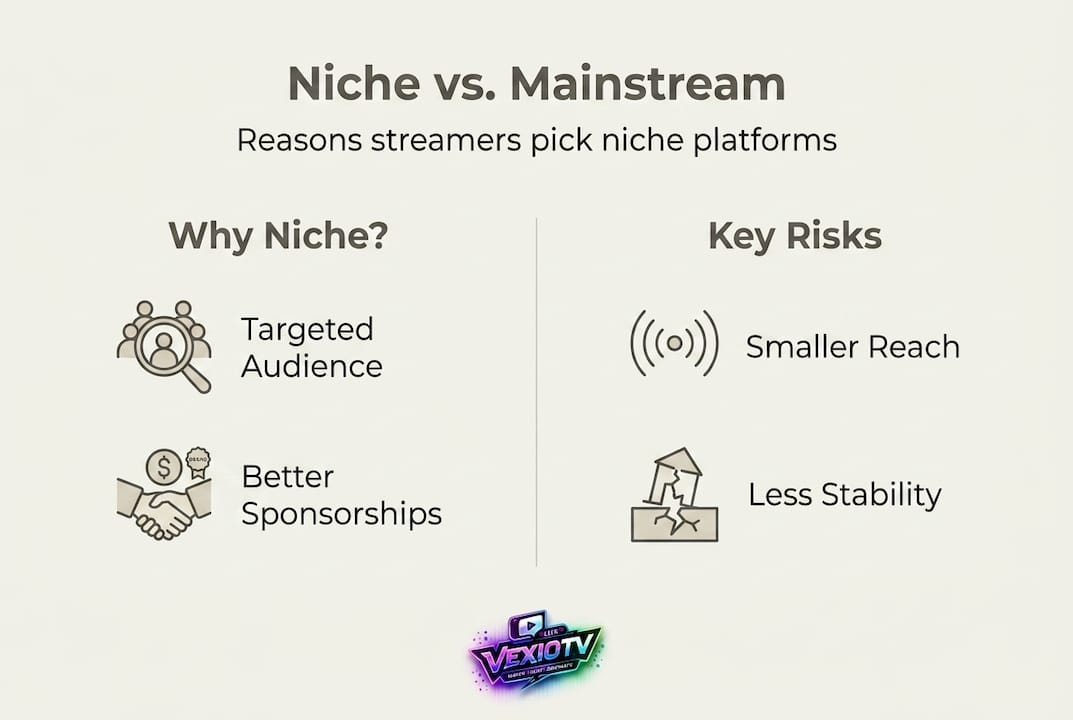
Streaming platform growth data shows that specialized communities consistently outperform general ones in time-on-platform and repeat visits. Viewers who share a focused interest stay longer and return more often. For creators, that translates to better engagement metrics and more predictable viewership.
Brands and sponsors also approach niche platforms differently. On a mainstream platform, a company looking to reach tabletop gaming fans has to sift through massive volumes of general gaming content. On a niche platform, that brand finds exactly the right audience with far less effort. Smaller platforms enable more intimate community engagement and targeted sponsorships for specific niches. That means brands are often willing to pay more per viewer on a niche platform because the fit is better.
Here is a direct comparison of how mainstream and niche platforms differ:
| Feature | Mainstream platforms | Niche platforms |
|---|---|---|
| Audience size | Very large | Smaller, more focused |
| Competition for discovery | Extremely high | Moderate to low |
| Sponsorship targeting | Broad, competitive | Precise, accessible |
| Community depth | Variable | Typically stronger |
| Monetization timeline | Slower, threshold-based | Often faster for specialists |
| Platform maturity | High (established tools) | Variable |
Content categories that thrive on niche platforms include:
- Indie and retro gaming streams
- Live music performances and DJ sets
- Specific game fandoms and competitive titles
- Creative arts including illustration and animation
- IRL content tied to hobbies like cooking or travel
- Tabletop and board game communities
- Educational and language-focused streams
Niche platforms are not a replacement for mainstream ones in every case. But they fill a gap that general platforms cannot easily address: the need for deep, focused community spaces where both creators and viewers feel like they belong.
The advantages of choosing a niche streaming platform
With a clear picture of what makes these platforms unique, let's explore why creators find them so beneficial.
The most immediate advantage is audience quality. On a niche platform, the people watching your stream are already interested in your content category. They did not accidentally land on your channel while browsing something else. They showed up because the platform itself attracts people like them. That baseline interest means higher engagement rates, more consistent chat activity, and stronger viewer loyalty over time.
Sponsorship opportunities work differently too. A creator with 500 dedicated viewers in a focused niche can attract better brand deals than a creator with 5,000 passive viewers on a general platform. Brands measure return on investment, and a highly engaged niche audience delivers better returns for relevant products. Smaller platforms enable targeted sponsorships that simply are not available at scale on mainstream platforms.
Monetization access is another practical advantage. Many mainstream platforms require creators to hit specific follower or watch-hour thresholds before they can earn revenue. Niche platforms often offer monetization tools earlier in a creator's journey, sometimes from the very first stream. This allows new creators to start building income streams before they have built a massive following. Loyalty programs, tipping systems, and community subscriptions are often built directly into niche platform interfaces.

Building streaming communities on niche platforms also tends to happen faster. When the entire platform is organized around shared interests, viewers naturally connect with creators who match their taste. Word-of-mouth within tight communities moves quickly. A recommendation from one respected community member can send a significant wave of new viewers to your channel.
Top benefits for streamers choosing niche platforms:
- Faster community growth within targeted audiences
- Higher engagement rates from interested viewers
- Access to relevant brand sponsorships at smaller audience sizes
- Earlier monetization options without steep entry requirements
- Reduced competition for viewer attention
- Stronger cross-promotion within the community
- Platform features designed for specific content types
Pro Tip: When you join a new niche platform, spend your first two weeks actively engaging in other creators' streams before you focus on growing your own. Being a visible, positive member of the existing community gets you noticed far faster than simply going live and hoping for traffic.
"Smaller platforms enable more intimate community engagement and targeted sponsorships for specific niches, giving creators a real revenue edge even at modest audience sizes." (Platform Wars 2026)
Understanding platform reach and revenue models helps you match the right platform to the right goals. Not every benefit will apply to every creator. The key is identifying which advantages align with your specific content and audience type.
Key challenges and trade-offs with niche platforms
Despite the positives, creators should be aware of potential hurdles and real limitations.
The most obvious challenge is audience ceiling. A niche platform has a smaller total user base by design. If your goal is to reach millions of casual viewers across multiple interest categories, a niche platform will limit your ceiling. Growth is possible but the absolute numbers will typically stay smaller than on a mainstream platform.
Platform stability is also a concern. Established platforms like Twitch and YouTube have the resources to maintain reliable uptime, consistent feature updates, and strong technical support. Smaller niche platforms may not have the same infrastructure. Outages, feature gaps, and slower development cycles are real risks. Niche platforms risk limited scale, immature tools, and audience transfer friction when compared to established mainstream alternatives.
Another friction point is moving your existing audience. If you built a following on Twitch and want to shift to a niche platform, convincing those viewers to follow you elsewhere takes real effort. Many viewers are habitual. They open the same apps every day without thinking about it. Asking them to change that habit, create new accounts, and learn a new interface causes drop-off. Not all of them will make the switch.
The biggest trade-offs to evaluate before migrating:
- Audience size limits mean your total viewership ceiling is lower, which affects ad revenue tied to raw reach.
- Tool maturity varies widely. Some niche platforms lack analytics, clip tools, or multi-stream integrations that mainstream platforms offer as standard features.
- Platform risk is real. Niche platforms sometimes shut down or pivot without much warning, which can leave creators scrambling.
- Brand awareness for the platform matters. Viewers may be less willing to join a platform they have never heard of, even if the content is compelling.
- Community transfer friction is significant. Moving an established fanbase requires a clear communication plan and often a transition period running both platforms simultaneously.
The modern streaming boom has created dozens of new platforms, but not all of them will survive. Research a platform's funding, user growth trends, and creator support before committing.
Pro Tip: Before fully committing to a niche platform, check three things. Look at how long the platform has been operating. Check whether other creators in your niche are actively streaming on it right now. And look for any public information about their monetization payout history. These three signals tell you a lot about platform viability.
How to decide if a niche platform is right for you
If you're considering a switch or expansion, here's how to evaluate whether a niche platform truly fits your needs.
Start with your audience. Who watches your streams right now? What are they passionate about? If your viewers have a clear, specific interest, a niche platform that serves that interest may give you immediate community alignment. If your audience is broad and varied, a niche platform might split your attention without clear gains.
Next, look at your content category. Some content types perform much better in niche environments. Music, indie gaming, specific competitive titles, and creative arts all tend to find stronger homes on focused platforms. General entertainment or variety content may actually do better on mainstream platforms where the discovery algorithms can surface you to a wider range of viewers.
Then consider your monetization goals. If you are early in your streaming career and want to start earning sooner, niche platforms with lower monetization thresholds are worth prioritizing. If you are already monetized on a mainstream platform and looking to diversify income, a niche platform becomes a secondary revenue channel rather than a primary one.
Key questions to ask before joining a niche platform:
- Does this platform serve my specific content category?
- Are there active viewers already here who match my audience profile?
- What monetization tools does the platform offer, and when can I access them?
- How stable is the platform, and what is their track record with creators?
- Can I stream here simultaneously with my existing platform?
- What does the discovery process look like for new creators?
- Are there community features like forums, events, or creator collabs built in?
Many experts recommend multi-platform strategies as the safest way to explore niche platforms without abandoning existing audiences. Cross-streaming or simultaneous streaming lets you test a new platform's audience without fully committing. You can use streaming best practices to optimize your output across multiple platforms without burning out.
| Situation | Best platform choice |
|---|---|
| Early career, niche content | Niche platform first |
| Established audience, broad content | Mainstream platform primary |
| Monetization diversification | Both, with niche as secondary |
| Community building in a specific genre | Niche platform primary |
| Maximum reach goals | Mainstream platform primary |
| Testing new content format | Niche platform as a sandbox |
Creators focused on music should also explore music streaming strategies that pair niche platform presence with social media distribution for maximum reach.
The real secret: Combine niche and mainstream for lasting success
All-or-nothing thinking is one of the most common mistakes streamers make when evaluating platforms. The argument is rarely "niche versus mainstream." The smarter position is knowing how to use both.
Niche platforms give you depth. Mainstream platforms give you scale. Neither one alone gives you both. Creators who build their core community on a niche platform and then distribute clips or highlights to mainstream platforms get the benefits of both without the trade-offs of either. That is not a compromise. That is a strategy.
We see this pattern consistently. The creators who thrive long-term are not the ones who pick a single platform and go all-in forever. They diversify. They experiment. They treat each platform as a different tool for a different job. Exploring types of live streams across platforms helps you identify where each content format performs best.
The uncomfortable truth is that exclusivity often hurts creators more than it helps them. Platform loyalty is admirable, but it is also fragile. Platforms change their algorithms, adjust their payout structures, and sometimes shut down entirely. Protecting your income and your audience means distributing your presence intentionally.
Start where your community is. Expand from there. Let the data tell you where to invest more time. That approach beats guessing every time.
Ready to engage your community on a new platform?
Trying a new streaming platform does not have to be a complicated process. Start small, stream consistently, and pay attention to how your audience responds. VexioTV makes that first step straightforward.
The VexioTV platform is built for creators who want to go live quickly, connect with viewers who care about their content, and access monetization tools without jumping through endless hoops. Whether you stream gaming, music, or creative content, the focus here is on community and earning. If you are ready to explore what engaging your audience looks like on a platform built for creators, sign up and go live. The tools are ready when you are.
Frequently asked questions
What are the biggest benefits of niche streaming platforms?
Niche platforms offer tighter community engagement, targeted sponsorships, and faster monetization for creators with specialized content, as smaller platforms enable intimate engagement that mainstream ones rarely match.
Are there risks in switching to a niche streaming platform?
Yes, risks include smaller audiences, less mature platform tools, and the challenge of moving your existing fanbase, since niche platforms risk limited scale and audience transfer friction compared to established alternatives.
Should I stream on both mainstream and niche platforms?
Many experts recommend multi-platform strategies to maximize reach and protect your income from single-platform dependency.
How do I choose which niche platform to join?
Assess your content type, community fit, and platform features, then try cross-streaming to compare audience response before fully committing to one option.
What content categories thrive most on niche platforms?
Genres like indie games, music, unique fandoms, and highly specialized interest streams consistently see the most engaged and loyal communities on niche platforms.