
TL;DR:
- Live streaming engagement is three times higher than pre-recorded videos.
- Creators who interact with viewers build stronger communities and increase income.
- Multistreaming across platforms expands reach and diversifies revenue sources.
Creators who rely only on pre-recorded uploads are leaving real growth on the table. Viewers stay 8.1x longer on live streams than on recorded video, and engagement runs three times higher. That gap is not small. It changes how communities form, how platforms surface content, and how income stacks up over time. If you stream gaming, music, or creative performances and want to grow faster, this breakdown covers the four areas that matter most: engagement, monetization, discoverability, and picking the right platform.
Table of Contents
- How streaming platforms supercharge engagement and community
- Monetization made easy: Revenue streams across platforms
- Growing your audience: Discoverability and algorithm advantages
- Choosing the right platform for your content
- What most creators miss about streaming platforms
- Ready to grow? Get started with powerful streaming tools
- Frequently asked questions
Key Takeaways
| Point | Details |
|---|---|
| Engagement advantage | Live streaming creates authentic, real-time interactions that build lasting communities. |
| Flexible monetization | Multiple revenue streams like subscriptions, gifts, and ads make earning accessible for all creators. |
| Discovery boost | Live platforms prioritize discoverability, helping creators get noticed fast through algorithms and FOMO. |
| Platform fit matters | Choosing the right platform for your niche and audience type unlocks the best growth potential. |
How streaming platforms supercharge engagement and community
With the growth of streaming, it is worth understanding why engagement on live platforms runs so far ahead of other content formats.
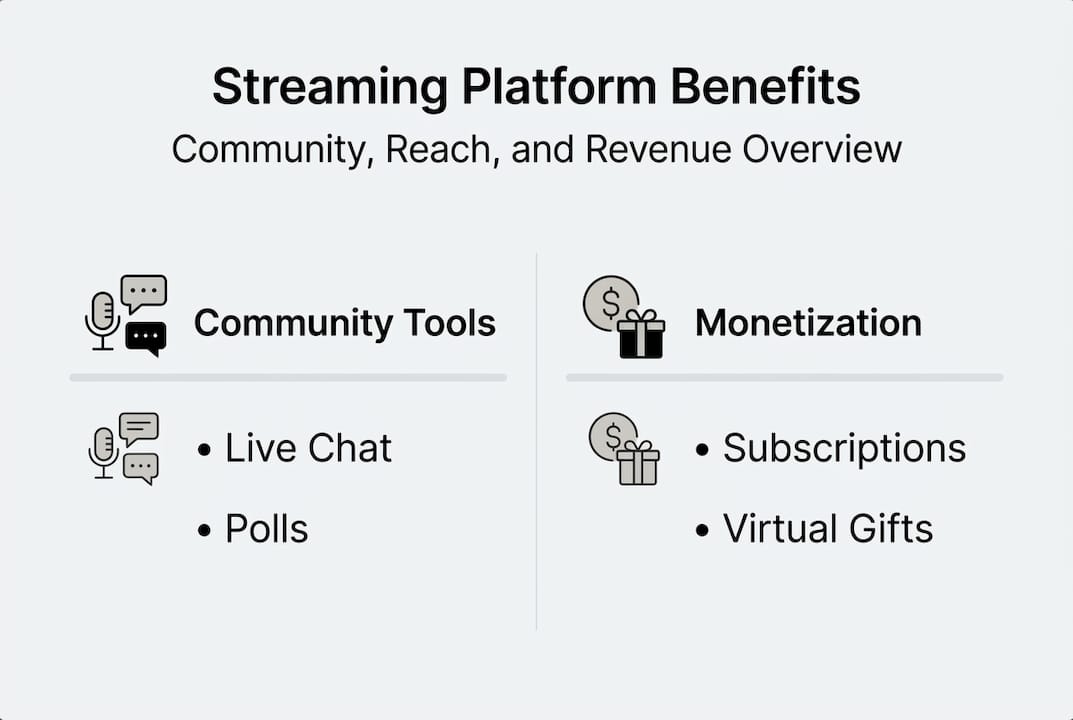
Live streaming platforms give creators tools that pre-recorded video simply cannot match: real-time chat, Q&A sessions, polls, and instant viewer feedback. These features turn passive watchers into active participants. That shift matters because viewers who interact are far more likely to return, subscribe, and share.
Recurring streams build streaming communities around shared schedules and inside jokes. Viewers start to feel like regulars. That sense of belonging keeps people coming back, not just for the content but for each other.
The numbers back this up:
- 80% of viewers prefer live video over reading a blog post on the same topic
- 47% brand awareness increase reported by creators who stream consistently
- 30% higher conversion rates compared to pre-recorded content
- Livestreaming benchmarks show these gains hold across gaming, music, and creative niches
"Live streaming is not just a broadcast. It is a conversation. The creators who treat it that way grow the fastest."
Using chat features well is one of the clearest ways to separate yourself from creators who just go live and talk at the camera. Acknowledge names. Run polls between rounds or songs. Ask questions and wait for answers. These small actions compound into loyal audiences over months.
The gaming community transformation is a clear example of what consistent engagement produces. Gaming went from a solo hobby to a spectator sport largely because streamers built communities around live interaction, not just skill.
Pro Tip: Add a browser extension or built-in poll tool to your stream at least once per session. Viewers who vote are significantly more likely to stay until the end.
Monetization made easy: Revenue streams across platforms
Greater engagement fuels monetary success. Let's look at how streaming platforms turn community into income.

Most major platforms support several revenue streams at once. Monetization options include paid subscriptions, one-time donations, ad revenue, and virtual gifts. The split between creator and platform varies, and knowing those numbers helps you plan.
| Platform | Subscription split | Ad revenue | Virtual gifts |
|---|---|---|---|
| Twitch | 50/50 (top creators 70/30) | Yes | Bits system |
| YouTube Live | 70/30 creator-favored | Yes | Super Chats |
| Kick | 95/5 creator-favored | Yes | Limited |
The global live streaming market is projected at $3.2 billion in 2026. That figure reflects real money flowing to creators, not just platform valuations. Getting your share means building multiple income layers, not relying on a single source.
Here is a straightforward process to diversify your streaming income:
- Start with donations and subscriptions. These require the least setup and reward consistent streaming schedules.
- Enable ads once you hit platform thresholds. Ad revenue is passive and scales with viewership.
- Add virtual gifts or tipping tools. These work especially well during live performances and gaming milestones.
- Repurpose stream clips for short-form content on other platforms to drive traffic back to your live channel.
- Go multiplatform. Streaming to two or three platforms at once multiplies your exposure without extra production work.
For musicians and performers, music streaming income tips show that hybrid models work well. Offer free public streams to build reach, then gate exclusive content or early access behind a paid tier.
Pro Tip: A hybrid free/paid model keeps casual viewers engaged while giving paying fans something worth the cost. Creators who use both tiers consistently report stronger long-term retention than those who go fully free or fully paid.
One more stat worth noting: 67% of viewers have purchased a product or service after watching a live stream. That number makes live streaming one of the most direct sales tools available to any creator.
Growing your audience: Discoverability and algorithm advantages
Once you are earning, standing out becomes the next challenge. Platform technology helps with that.
Algorithms on most major platforms prioritize live content over uploaded videos in real time. When you go live, the platform sends notifications to followers, bumps you in search results, and sometimes features you on trending or discovery pages. Pre-recorded uploads do not get that push at the moment of publishing.
Key discoverability methods on streaming platforms include:
- Push notifications sent directly to followers when you go live
- Trending and featured pages that surface active streams to new viewers
- FOMO dynamics where the live format creates urgency that recorded content cannot replicate
- Search prioritization of live content during active broadcast windows
- Clip sharing that drives external traffic back to your channel
Platform strengths differ, and knowing them helps you pick where to focus:
| Platform | Discoverability strength | Best for |
|---|---|---|
| YouTube | Largest reach; ~47-50% of hours watched in 2025 | Broad audiences, music, tutorials |
| Twitch | Gaming-first algorithm; strong community tabs | Gaming, creative categories |
| TikTok | Short-clip virality feeds live traffic | Dance, music, trending content |
Live streams make up 28.5% of all internet users' weekly viewing time. That share is growing. Creators who establish a live presence now are building discoverability habits before the space gets more crowded.
Multistreaming adds another layer. Broadcasting to YouTube and Twitch simultaneously means two algorithms working for you at the same time. For a breakdown of formats that work across platforms, types of live streams covers the main options and what each one does best.
Choosing the right platform for your content
With technology and audience insights in hand, picking the right platform can make the difference between steady growth and a plateau.
Not every platform fits every creator. Twitch excels for gaming and creative content, YouTube offers the widest general reach, and TikTok drives discovery for short, high-energy content. Matching your niche to the right platform saves time and accelerates growth.
Here is a quick breakdown by content type:
- Gaming: Twitch for community depth; YouTube for searchable VODs; Kick for better revenue splits
- Music and performance: YouTube for reach; TikTok for clip virality; dedicated music platforms for niche audiences
- IRL and lifestyle: IRL streaming works well on Twitch and YouTube, where longer session formats are normal
- Creative shows: Twitch's creative category and YouTube both support long-form visual content
Multistreaming is worth considering regardless of niche. It increases both reach and income without requiring you to produce separate content for each platform. Most multistreaming tools let you manage chat from all platforms in one place.
Audio quality matters more than most new streamers realize. For musicians especially, poor audio drives viewers away faster than any other technical issue. Prioritize your microphone and audio interface before spending on cameras or lighting.
Pro Tip: Gaming features like polls and channel point rewards can be adapted for music and creative streams. Ask viewers to vote on the next song, the next art piece, or the next game level. The mechanic works across niches.
If you are evaluating where to start or expand, looking at platform alternatives gives you a broader picture of what is available beyond the three biggest names.
What most creators miss about streaming platforms
Having covered the essentials, here is a direct look at where most streamers go wrong and what actually works.
Many creators delay going live because they want a perfect setup first. That is a mistake. Streaming builds skills through practice, and iterative improvements made over dozens of streams beat a single polished production. Start now. Improve as you go.
The creators who grow fastest treat their streams as content factories. Every live session produces clips, highlights, and short-form posts. Repurposing that material multiplies reach without extra live hours. One two-hour stream can generate a week of short clips.
Hybrid content models are underused. Most streamers go fully free or try to gate everything. The creators who build sustainable income offer a free public stream for discovery and a paid tier for exclusive access. That structure works because it serves both casual viewers and committed fans at the same time.
Do not overlook engagement tools. Polls, alerts, and channel rewards are built into most platforms for a reason. Creators who use them consistently report stronger retention. The streaming boom insights show that audience habits are shifting toward interactive content. An interactive stream setup does not need to be complicated to be effective.
Innovation matters more than perfection. The streamers who experiment with formats, schedules, and engagement tools outpace those who wait until everything feels ready.
Ready to grow? Get started with powerful streaming tools
If you are ready to maximize your impact, here is how to put all of this into action.
VexioTV is built for creators who want to go live without friction. One click starts your stream, whether you are gaming, performing, or broadcasting IRL. The platform supports community building and creator monetization from day one.
Explore the streaming platform tools available on VexioTV to see how they fit your content goals. Whether you are just starting out or looking to add another platform to your multistreaming setup, VexioTV gives you the tools to stream, engage, and earn. Sign up and go live today.
Frequently asked questions
What makes live streaming more engaging than pre-recorded video?
Live streaming enables real-time interaction through chat, polls, and Q&A, which boosts engagement by 3x over recorded content and keeps viewers watching 8.1x longer.
How do creators make money on streaming platforms?
Creators earn through subscriptions, donations, ads, and virtual gifts. Each platform offers different revenue splits, with Kick offering the most creator-favorable terms at 95/5.
Which streaming platform is best for musicians?
YouTube offers the broadest reach for musicians, while TikTok drives clip virality. Multistreaming across platforms maximizes both income and exposure at the same time.
What is multistreaming and why use it?
Multistreaming means broadcasting to multiple platforms simultaneously. It boosts audience reach and total revenue without requiring separate content production for each platform.