
TL;DR:
- Viewer-driven payments now constitute the majority of income for streaming creators.
- Effective monetization requires active management of tools, compliance, and data-driven strategies.
- Diversifying income sources and continuously optimizing content and community engagement are essential for scaling.
Most streamers assume ad revenue is their primary income source. It is not. Viewer-driven payments, including virtual gifts, tips, and direct support, now account for the majority of earnings for live creators on major platforms. This shift changes everything about how you should plan and prioritize your monetization strategy. This guide breaks down how streaming income actually works today, which tools to use, how to stay compliant, and how to scale beyond the basics. Whether you are just starting or already earning, these strategies apply directly to your situation.
Table of Contents
- How streaming monetization really works
- The essential tools and models for stream monetization
- Platform compliance: Unlocking and protecting your revenue
- Advanced strategies: Data, diversification, and scaling revenue
- Our take: What most guides miss about monetizing your stream
- Take your streaming income to the next level
- Frequently asked questions
Key Takeaways
| Point | Details |
|---|---|
| Audience payments lead | Direct viewer support and gifting now make up the majority of creator revenue on live streaming platforms. |
| Tools require strategy | Effective monetization hinges on knowing and configuring platform tools, not just enabling features. |
| Compliance is critical | Staying eligible and following policy is essential to keep all your monetization channels working. |
| Diversify to grow | Mixing multiple revenue streams and leveraging analytics are vital for sustainable, scalable income. |
How streaming monetization really works
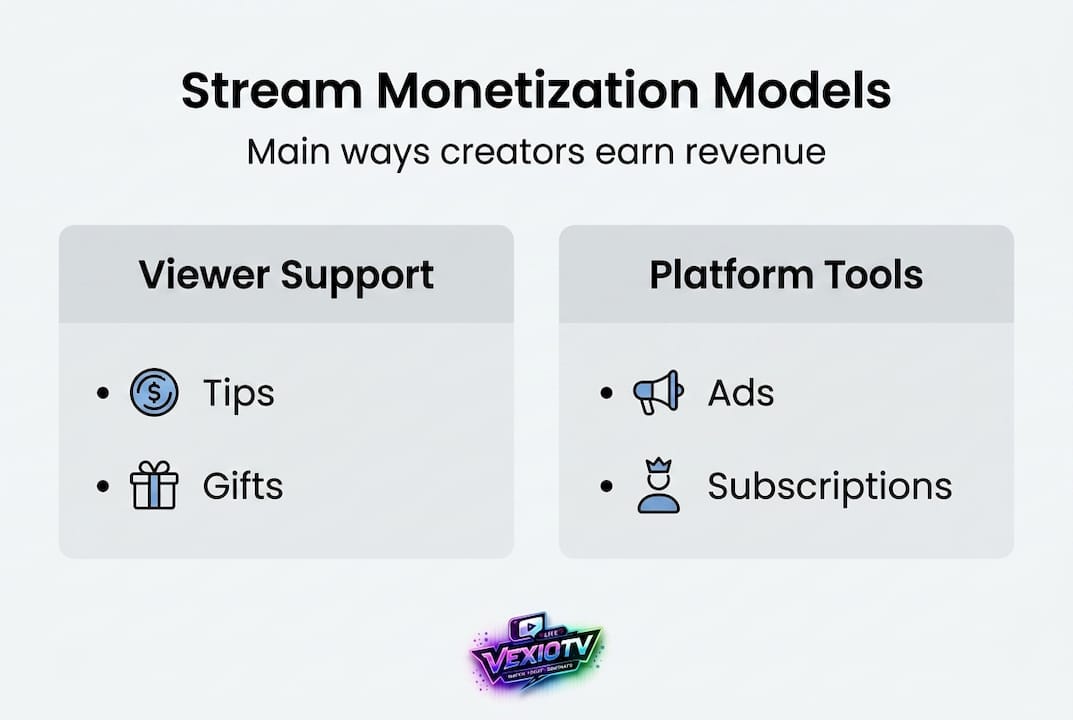
Understanding where your money comes from is the first step. Streaming monetization for live creators is primarily achieved through viewer-participation payments, recurring support, platform ad revenue, and ancillary revenue. Each channel works differently, and each requires a different approach.
Here is a quick breakdown of the four main income categories:
| Income type | Examples | Stability | Growth potential |
|---|---|---|---|
| Viewer participation | Gifts, tips, Super Chat | Variable | High |
| Recurring support | Subscriptions, memberships | Stable | Moderate |
| Ad revenue | Pre-rolls, mid-rolls, display | Stable | Low to moderate |
| Ancillary revenue | Merch, affiliates, brand deals | Variable | High |
Viewer participation is now often the largest single income driver for active live streamers. Audience members send virtual gifts or tips in real time, triggered by specific moments in your stream. This is not passive. It responds directly to what you do on screen.
Recurring support through subscriptions gives you predictability. You know roughly what is coming in each month. But in many regions, gifting and participation payments outpace subscription income, especially for creators with engaged communities.
There are also solid reasons to stream for revenue beyond just supplemental income. Many full-time creators now earn the majority of their living through live content. Looking at engagement and income strategies shows that the creators who earn the most are the ones who understand all four channels and activate them simultaneously.
The key insight: do not treat these channels as separate. They overlap and reinforce each other. A viewer who subscribes is more likely to send a gift. A brand deal is easier to secure when your subscription numbers show consistent audience loyalty.

The essential tools and models for stream monetization
Now that you know the big monetization categories, let's dig into the actual money tools creators use on different platforms.
Different platforms offer different tools. Here is a comparison of the most common features:
| Platform | Fan funding tool | Subscriptions | Ad revenue share |
|---|---|---|---|
| YouTube | Super Chat, Super Stickers | Channel memberships | Yes |
| Twitch | Bits, Cheering | Tier 1/2/3 subs | Affiliate/Partner |
| Facebook Gaming | Stars | Fan subscriptions | Yes (Partner) |
| VexioTV | Gifting, direct support | Creator subscriptions | Yes |
Each tool has its own eligibility requirements. Most require a minimum account standing, active chat, and consistent streaming history. Turning on these features is only part of the work. Optimizing them is what drives real income.
For example, YouTube's Super Chat revenue gives eligible creators 70% of confirmed Super Chat payments. That is a significant cut. But you have to qualify first, and your live chat must be enabled and unrestricted.
Here is how to set yourself up for maximum tool performance:
- Confirm your account meets minimum thresholds for each platform's monetization program.
- Enable live chat and verify that it is set to public and unrestricted.
- Connect your payment account so funds can actually be transferred.
- Test each feature before going live to confirm it displays correctly to viewers.
- Monitor which tools generate the most engagement during each stream.
Pro Tip: Plan specific "supportable moments" into your stream structure. Live Q&A segments, goal milestones, and countdown challenges give viewers clear reasons to send Super Chats, Bits, or gifts. These moments do not happen by accident. Build them into your schedule.
For a deeper look at live stream monetization features, reviewing platform-specific guides helps you understand exactly what each tool does and when it triggers. Also, the role of chat in monetization is often underestimated. An active, engaged chat directly increases the frequency and size of viewer payments.
Platform compliance: Unlocking and protecting your revenue
Monetizing isn't just turning on a switch. Compliance is critical. Let's look at where creators often lose, or risk, their streaming income.
Many creators activate monetization tools and then accidentally disable them by changing account or content settings. YouTube's Super Chat and Super Stickers have explicit eligibility and policy constraints, including availability by location and content settings. A single configuration change can cut off your income without any warning.
Common monetization blockers to watch:
- Made for Kids setting: Enabling this disables all fan-funding features immediately.
- Unlisted or age-restricted videos: These content types are not eligible for Super Chat or similar tools.
- Fundraiser mode: Running a charitable fundraiser often disables standard gifting features.
- Restricted chat settings: Limiting or disabling chat removes the tool entirely.
- Geographic restrictions: Some features are not available in all countries or regions.
Policy compliance is part of the monetization system, not an afterthought. Treat it as a core operational task, not a one-time setup.
Pro Tip: Set a monthly reminder to review platform policy updates. Platforms adjust eligibility rules, content categories, and feature availability regularly. Missing an update can cost you revenue without you even noticing.
Here is a quick compliance checklist to run before each stream:
- Verify live chat is enabled and set to public.
- Confirm video or stream is not marked as Made for Kids.
- Check that your content category does not trigger restricted mode.
- Ensure your connected payment account is active and verified.
Following streaming best practices consistently reduces your risk of accidental demonetization. Also review your interactive configuration for monetization to make sure all technical settings align with current platform requirements.
Advanced strategies: Data, diversification, and scaling revenue
With basics and compliance secured, the next step is to scale and future-proof your revenue. Here is how advanced creators do it.
Top-earning creators do not rely on one income source. Trusted measurement and first-party data are now critical for maximizing and scaling streaming revenue. Knowing your audience at a data level changes how you price, pitch, and position every income opportunity.
Three advanced revenue strategies that work:
- Data-driven content planning. Use platform analytics to identify which stream types, times, and topics generate the highest gifting rates. Repeat what works. Cut what does not.
- Income diversification. Subscriptions provide stability while audience participation features drive growth. Running both together creates a balanced income structure.
- Audience insight activation. First-party data, meaning data you collect directly from your audience, enables you to secure better brand deals, launch targeted merchandise, and build more relevant content offerings.
Ancillary revenue streams worth adding as your audience grows:
- Merchandise: Custom products tied to your stream brand or community identity.
- Affiliate marketing: Product links that earn a commission when viewers purchase.
- Digital courses or guides: Teach a skill your audience already follows you for.
- Brand partnerships: Sponsored content that fits naturally into your stream format.
Most top-performing creators mix at least three income sources. Single-source reliance is a risk. Platform algorithm changes, policy updates, or audience shifts can cut a single revenue stream significantly. Diversification protects against that.
For broader platform growth strategies, combining data use with income layering is what separates hobby streamers from full-time creators. This approach also applies well to livestreaming for artists who want to build sustainable income around their creative work.
Our take: What most guides miss about monetizing your stream
Most monetization guides focus on which tools to turn on. That is only part of the picture. The bigger issue is that many creators treat revenue as something that happens automatically once features are enabled. It does not work that way.
Sustainable streaming income comes from three things: knowing how platform mechanics actually function, actively building a community that wants to support you, and testing configurations until you find what works for your specific audience. Passive strategies alone will not get you there.
Creative ideas for monetization matter, but execution matters more. Seasoned creators treat stream configuration and policy knowledge as real business skills. They run feedback loops. They adjust quickly when something changes. They do not wait for results to appear.
Pro Tip: Schedule a weekly review of your stream analytics. Note which segments drove the most viewer participation. Rebuild your next stream around those moments. Repeat this process consistently and your income will follow.
Take your streaming income to the next level
You now have a clear view of how streaming monetization works, which tools to use, how to stay compliant, and how to scale. The next step is putting it into practice.
VexioTV is built for creators who want to earn from their live content without unnecessary friction. The platform supports community-driven monetization, interactive streaming, and creator growth at every level. Explore our full library of guides covering innovative streaming monetization ideas, platform resources, and creator support tools. Sign up, go live, and start building revenue streams that work for your content and your audience.
Frequently asked questions
What is the most profitable streaming monetization method in 2026?
Viewer-participation payments like virtual gifting and tips now drive the largest creator earnings on most major platforms. These payments are real-time and audience-triggered, making them highly responsive to your content quality.
How do I become eligible for YouTube Super Chat?
You must meet YouTube's fan-funding requirements, have live chat enabled, and avoid restricted content or video types. Eligibility also depends on your account's location and standing.
Can monetization features be turned off by accident?
Yes. Updating content settings like disabling chat or switching to a restricted content category can disable major monetization tools. Always review settings before and after any configuration change.
How important is data and analytics for scaling income?
First-party data and measurement are now critical for maximizing and scaling streaming revenue. Creators who use their analytics actively earn more from brand deals, merchandise, and targeted content strategies.