
TL;DR:
- Mobile streaming now primarily involves delivering real-time or on-demand audio, video, and gaming content directly to smartphones and tablets over the internet. It depends on adaptive bitrate protocols like HLS and MPEG-DASH to ensure smooth playback across diverse devices and network conditions, shaping sectors like gaming, music, and live broadcasts. Despite challenges such as network inconsistency and device fragmentation, mobile streaming offers unmatched accessibility, personalization, and monetization opportunities for creators and viewers alike.
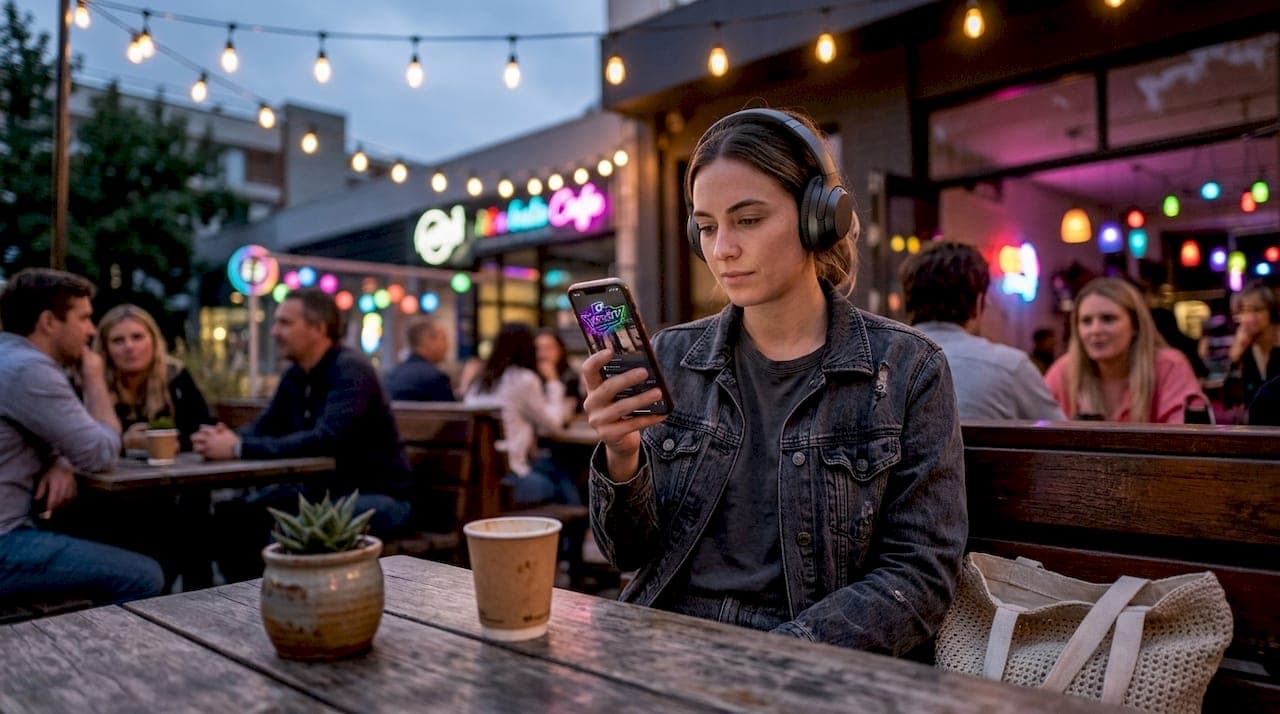
Most people assume streaming means sitting on a couch with a smart TV remote. That assumption is outdated. What is mobile streaming, exactly? It is the delivery of audio, video, gaming, and live content directly to a smartphone or tablet over the internet, in real time or on demand. Over 70% of video consumption now begins on mobile devices, making your phone the most dominant screen in media history. This guide breaks down how it works, where it applies, and what it means for creators, gamers, and everyday viewers in 2026.
Table of Contents
- Key takeaways
- What is mobile streaming and how does it work
- The role of mobile streaming across gaming, music, and live content
- Benefits and challenges of mobile streaming
- Trends shaping mobile streaming in 2026
- My take on what most people get wrong about mobile streaming
- Start streaming with Vexiotv
- FAQ
Key takeaways
| Point | Details |
|---|---|
| Mobile is the primary screen | More than 70% of video consumption starts on smartphones, not TVs or desktops. |
| Adaptive bitrate keeps it smooth | Streaming apps automatically adjust video quality based on your network speed to reduce buffering. |
| Applications span multiple sectors | Gaming, music, and live content creation all rely on mobile streaming in distinct ways. |
| Challenges are real but solvable | Network inconsistency, device diversity, and battery limits affect quality but technology addresses each. |
| Creator monetization is growing | Mobile platforms now offer direct revenue tools, making streaming a viable income source for creators. |
What is mobile streaming and how does it work
Mobile streaming is the process of sending media data over a network to a mobile device without requiring a full file download first. The content plays as data arrives. That sounds simple. The technical reality behind it is not.
When you tap play on a video or go live from your phone, the system running in the background is managing several tasks at once. The content is encoded into multiple quality levels and divided into small chunks, usually a few seconds long each. Your device requests these chunks from a content delivery network (CDN), which is a system of servers distributed globally to reduce the distance data travels.
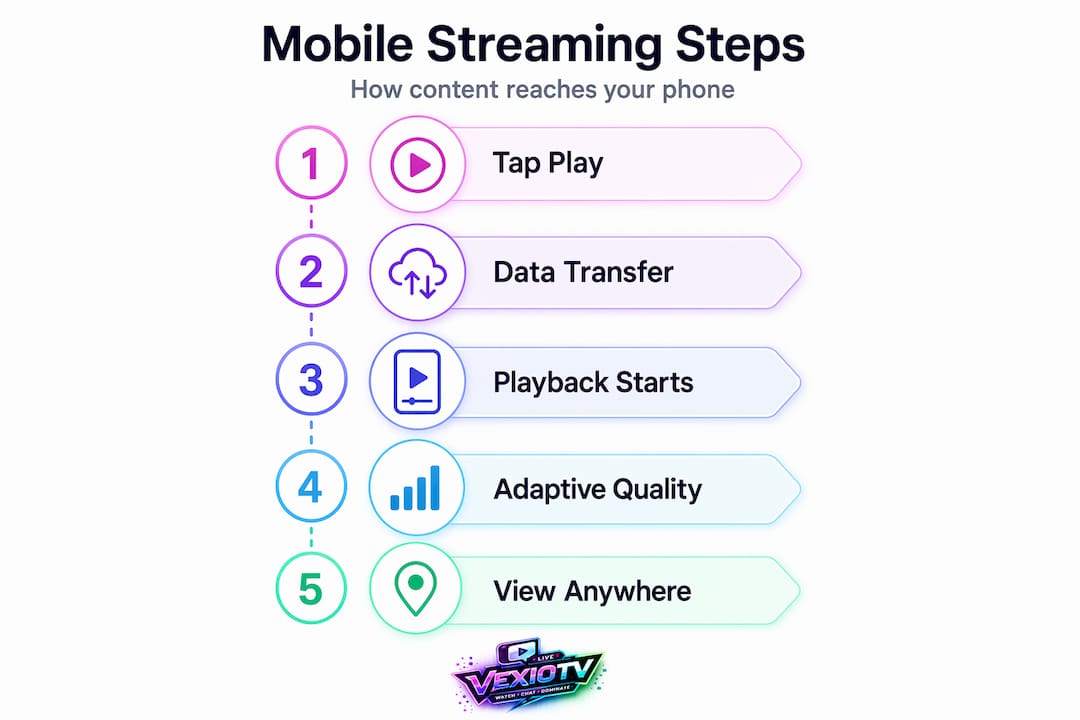
The key technology making this work is adaptive bitrate streaming (ABR). ABR creates multiple renditions of a stream, for example at 1080p, 720p, 480p, and lower resolutions. The app on your phone monitors your connection in real time and switches between these renditions automatically. If your signal drops, the quality drops temporarily instead of the stream stopping entirely.
Two protocols handle most of this delivery today:
- HLS (HTTP Live Streaming): Developed by Apple, now widely supported across all major platforms and devices.
- MPEG-DASH (Dynamic Adaptive Streaming over HTTP): An open standard that works across a broader range of ecosystems and is codec-agnostic.
| Protocol | Creator | Best use case | Device support |
|---|---|---|---|
| HLS | Apple | iOS, Safari, broad OTT | Near-universal |
| MPEG-DASH | ISO/IEC | Multi-device, open platforms | Android, browsers |
| RTMP | Adobe (legacy) | Ingest from encoders | Server-side only |
Mobile streaming also faces a challenge traditional TV never had. Mobile apps must handle fragmentation across hundreds of device types, operating systems, and network conditions. A stream that plays perfectly on a flagship phone may stutter on a two-year-old mid-range device with a weaker CPU. Client-side logic, edge caching, and adaptive bitrate ladders work together to close that gap.
Pro Tip: If you are setting up a mobile stream, test it on at least three different devices and two different network conditions, such as WiFi and 4G, before going live to a real audience.
The role of mobile streaming across gaming, music, and live content
Mobile streaming does not look the same across every sector. Each application has distinct requirements, user behaviors, and technical pressures.
Cloud gaming
Cloud gaming pushes the boundaries of what mobile streaming can do. Instead of streaming video, it streams an interactive session. The game runs on a remote server, and the video output is sent to your phone in real time. You send inputs back. This approach lets low-end devices run console-quality games, provided the network connection holds up.

The catch is latency. Even a 50-millisecond delay feels noticeable in a fast-paced game. Cloud gaming requires very low-latency networks to function well, which is why 5G adoption has accelerated its growth. Without low latency, input lag makes gameplay frustrating regardless of how powerful the server is.
Music streaming
Music streaming on mobile operates differently. Latency is not a concern. File size and offline access matter more. Services encode audio at multiple bitrates, similar to video ABR, and let users download tracks for offline playback. Mobile usage patterns here are fragmented and habitual. People stream music while commuting, exercising, or cooking. The app needs to handle interruptions cleanly, such as phone calls, notifications, and headphone disconnects, without losing the session.
Mobile music platforms also drive significant engagement through personalized playlists and algorithmic recommendations. These features are built specifically for how people use their phones, not how they use a desktop browser.
Live content creation
Live streaming from a mobile device is where mobile streaming intersects with creator culture most directly. A creator can pull out a phone, open an app, and broadcast to thousands of people within seconds. Mobile live streaming enables real-time interactions like live chat, reactions, and tipping that make the experience fundamentally different from pre-recorded content.
This applies to gaming streams, IRL content, music performances, and creative sessions. The spontaneity mobile offers is a feature, not a workaround. Audiences respond differently to someone streaming from the street versus a polished studio setup.
Key ways mobile shapes creator behavior:
- Creators go live more frequently because the barrier is a single tap.
- Audiences expect real-time responses, which drives engagement metrics higher.
- Short-form vertical video, shaped by mobile screen dimensions, has become a default content format.
- Monetization through tips, subscriptions, and ads is built into mobile-first platforms at the app level.
Benefits and challenges of mobile streaming
Understanding the benefits of mobile streaming is straightforward. The challenges are where most guides stop short.
What makes mobile streaming powerful
The core benefit is access. A smartphone in someone's pocket gives them a fully functional streaming device anywhere there is a signal. No cable box. No living room required. Mobile apps outperform traditional broadcast in personalization, interactivity, and monetization flexibility, making them the preferred choice for creators and on-demand viewers alike.
Personalization is significant. Mobile streaming apps track behavior and surface content that matches individual preferences. This keeps users in the app longer and increases the chance they find content worth paying for.
The real challenges creators and platforms face
-
Network inconsistency. Mobile networks vary by location, time of day, and congestion. A stream that runs at 1080p in a city center may drop to 360p in a suburban area. ABR helps, but it cannot fix a network that disappears entirely.
-
Device diversity. Thousands of Android device configurations exist across different manufacturers and OS versions. What renders correctly on one device may fail on another. Successful streaming workflows require testing across multiple device and browser ecosystems, not just one reference phone.
-
Battery and CPU load. Encoding and decoding video at high quality drains battery fast. Hardware acceleration helps on newer chips, but older devices struggle. Creators streaming for hours on mobile need to manage heat and battery actively.
-
Latency trade-offs. Lower latency means less buffering protection. Higher latency means a smoother stream but delayed interaction. Finding the right balance depends on the content type, with gaming needing lower latency and VOD tolerating higher.
Pro Tip: For live mobile streams, keep your upload bitrate at or below 60% of your actual upload speed. This buffer prevents dropped frames when your network fluctuates.
Trends shaping mobile streaming in 2026
Mobile streaming is not static. Several shifts are defining how it works and who benefits in 2026.
Mobile-first platforms have fundamentally changed content format expectations. Short vertical videos, live reactions, and interactive overlays are now standard features that longer-form platforms are adopting to stay relevant.
Key trends worth watching:
- AI-driven personalization. Platforms use machine learning to predict what content a user will watch next, reducing drop-off and increasing session length.
- Edge computing. Processing closer to the user reduces the distance data travels, cutting latency and improving stream quality in dense areas.
- Creator monetization tools. Live streaming matters more for creators in 2026 than ever, with platforms building direct tipping, subscription tiers, and ad-share programs into the mobile experience.
- Hybrid strategies. Broadcast handles large-scale, low-latency events. Mobile apps handle personalization and on-demand. Many platforms now run both simultaneously.
"Broadcast can deliver predictable low-latency streams for large events, but mobile apps prioritize personalization and monetization in ways that broadcast simply cannot replicate." — Mobile Apps vs Traditional Media
The growth of streaming platforms also reflects a broader shift: audiences expect to control what they watch, when they watch it, and on which screen. Mobile gives them that control completely.
My take on what most people get wrong about mobile streaming
I have spent years watching creators and developers treat mobile streaming as a scaled-down version of desktop or TV streaming. That framing creates real problems.
Mobile streaming is not a smaller version of something else. It is its own medium with its own rules. The screen is vertical. The sessions are shorter. The audience is multitasking. When I see a creator complain that their stream looks bad on mobile, the issue is almost never the platform. It is that they designed the stream for a 27-inch monitor.
The most common mistake I see is chasing resolution. Stable 1080p at 30fps consistently beats unstable 4K every time on mobile. A pixelated frame that holds is better than a sharp frame that freezes. Audiences tolerate lower quality. They do not tolerate buffering.
What I have learned is that consistency wins on mobile. A creator who goes live at the same time with a reliable stream and talks directly to their chat will outperform a creator with a better setup who drops frames every ten minutes. Mobile audiences are not passive. They leave fast when the experience breaks.
If you are building a mobile streaming workflow, invest in your upload connection before you invest in a better camera. The camera matters far less than most people think.
— M7
Start streaming with Vexiotv
Vexiotv is built for creators who want to go live without friction. Whether you stream gaming sessions, music performances, or everyday IRL content, Vexiotv gives you a platform to broadcast, build a community, and earn from your streams. One click gets you live. The platform handles the technical side so you can focus on your content.
If you are ready to put what you have learned about mobile streaming into practice, Vexiotv is a direct path to doing that. Explore creator monetization strategies to understand how to earn from your streams, or check out music streaming ideas to build an audience around your performances. Sign up at Vexiotv and go live today.
FAQ
What is mobile streaming in simple terms?
Mobile streaming is the delivery of video, audio, or live content to a smartphone or tablet over the internet without downloading the full file first. Content plays as data arrives in real time.
How does mobile streaming work technically?
Mobile streaming uses adaptive bitrate technology to deliver content in small chunks at varying quality levels. The app on your device monitors your connection speed and switches between quality levels automatically to reduce buffering.
Is mobile streaming worth it for content creators?
Yes. Mobile streaming gives creators an immediate, low-barrier way to reach audiences in real time. Platforms now offer built-in monetization tools including tips, subscriptions, and ad revenue, making it a practical income source.
What are the main benefits of mobile streaming?
The main benefits are accessibility, personalization, and reach. You can stream or watch from anywhere with a signal, and mobile apps tailor content recommendations based on individual behavior far better than traditional broadcast.
What affects the quality of a mobile stream?
Network speed and consistency are the biggest factors. Device CPU, available memory, and upload bitrate also matter. Adaptive bitrate streaming compensates for fluctuating connections, but a weak or unstable signal will always limit the maximum quality.