
TL;DR:
- Live streaming is a major entertainment platform projected to reach 247 billion dollars by 2027.
- It fosters authentic engagement and community, building trust faster than pre-recorded videos.
- Successful creators use hybrid strategies, combining live interaction with recorded content for sustainability.
Live streaming is no longer a niche hobby. It is a dominant force in how entertainment is produced, shared, and consumed. Many creators still assume that polished, pre-recorded videos are the gold standard for building an audience. That assumption is wrong. The global live streaming market is projected to reach $247 billion by 2027, with 26.8% of internet users tuning in weekly. For entertainment creators specifically, going live is not just an option. It is a growth strategy that pre-recorded content simply cannot replicate on its own.
Table of Contents
- The explosive rise of live streaming
- Why live engagement beats pre-recorded content
- The flip side: challenges and pitfalls in live streaming
- Making live content work: strategies for creators
- The hidden truth about live streaming's impact
- Ready to go live? Find your audience with VexioTV
- Frequently asked questions
Key Takeaways
| Point | Details |
|---|---|
| Rapid market growth | Live streaming is a global phenomenon with huge reach and rising market value. |
| Authenticity drives engagement | Creators deepen trust by interacting live with their communities. |
| Challenges exist | Technical and emotional hurdles require careful management for sustained success. |
| Hybrid works best | Combining live events with repurposed on-demand content delivers long-term value. |
The explosive rise of live streaming
The numbers behind live streaming are hard to ignore. The format has moved from a novelty to a core part of how audiences consume entertainment. Viewers do not just want to watch anymore. They want to participate.
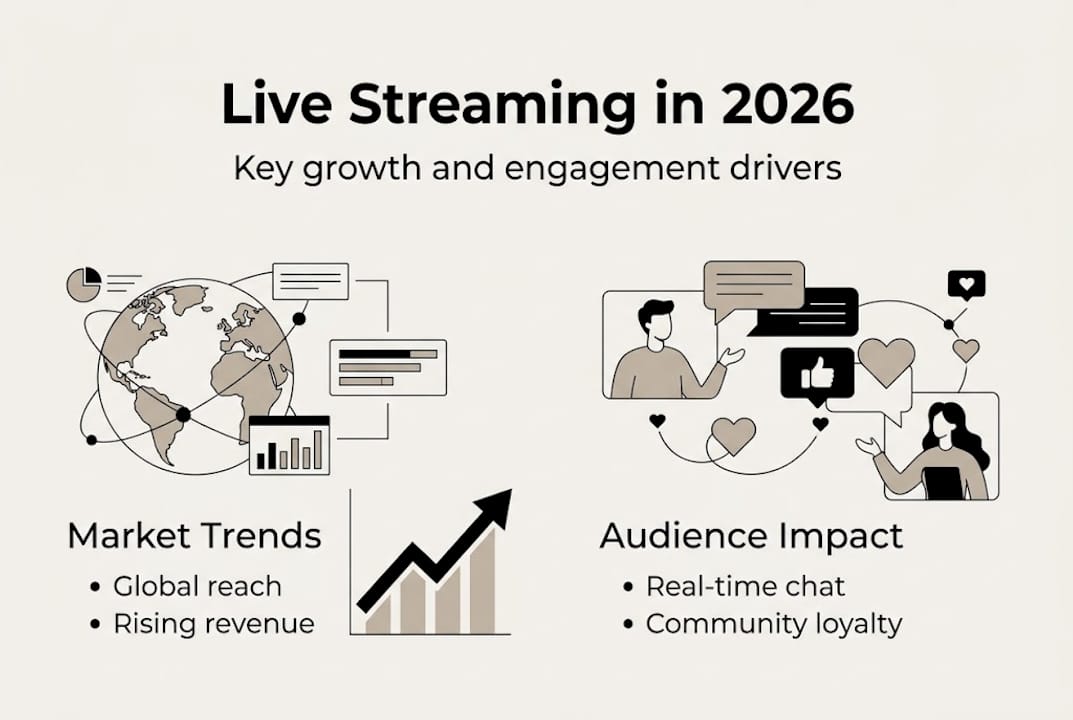
Platform reach and market value reflect this shift clearly. According to market data, the live streaming market is on track to hit $247 billion by 2027. YouTube Live currently holds roughly 50% of the platform market share, making it the single largest hub for live content worldwide.
| Platform | Primary audience | Market share |
|---|---|---|
| YouTube Live | General and entertainment | ~50% |
| Twitch | Gaming and community | ~25% |
| Facebook Live | Social and casual viewers | ~15% |
| Other platforms | Niche and emerging creators | ~10% |
These numbers signal a broader behavioral shift. Audiences are moving away from passive consumption toward real-time interaction. This is especially true in entertainment sectors like gaming, music, and IRL content.
"Live streaming is not a replacement for traditional content. It is an entirely different relationship between creator and audience."
Creators who engage, monetize & grow through live formats tend to build faster, more loyal followings than those relying solely on pre-recorded uploads. The interaction is the product, not just the content.
The entertainment boom is also tied to accessibility. Smartphones and affordable broadband have made it easy for nearly anyone to go live. This has dramatically lowered the barrier for creators and dramatically raised viewer expectations for real-time access to their favorite personalities.
Weekly reach is another telling stat. With 26.8% of global internet users watching live content every single week, live streaming is not a trend. It is a viewing habit. Creators who ignore it are leaving a significant and growing portion of potential audience engagement on the table.
Why live engagement beats pre-recorded content
Beyond the numbers, live streaming transforms how creators and audiences interact. A pre-recorded video is a one-way broadcast. A live stream is a conversation.
Research shows that streamer trustworthiness directly boosts information-seeking behavior among viewers, and that high-quality content benefits even more from live delivery. Twitch excels for gaming communities, while YouTube provides stronger discoverability and VOD replay value.
This matters because trust is the foundation of any creator's long-term success. Live streaming builds that trust faster. Viewers see unscripted moments. They see mistakes handled in real time. That authenticity is something edited videos simply cannot replicate.
Comparing the two formats shows clear differences in what each offers:
| Feature | Live streaming | Pre-recorded video |
|---|---|---|
| Audience interaction | Real-time chat and response | Comment sections after upload |
| Authenticity | High, unscripted | Variable, often edited |
| Discoverability | Moderate, platform-dependent | Strong through SEO |
| Community building | Fast and direct | Slower, more passive |
| Content longevity | Lower unless archived | High as evergreen content |
For entertainment creators, live streaming communities form around shared real-time experiences. A viewer who watches you live is far more invested than someone who clicks on a YouTube video from search.
Key reasons why live interaction creates stronger bonds:
- Real-time chat lets audiences influence what happens on stream
- Shoutouts and direct replies make viewers feel seen and valued
- Unscripted moments generate memorable, shareable content
- Regular live schedules train audiences to return repeatedly
Pro Tip: Use polls and Q&A features during streams to boost engagement with chat. Audiences who interact are significantly more likely to return for future streams.
The flip side: challenges and pitfalls in live streaming
Still, live streaming isn't without its hurdles. Even seasoned creators face significant challenges that pre-recorded content creators rarely encounter.
The most common issues fall into three categories: technical, emotional, and strategic. Technical challenges include latency problems, bandwidth drops, and unstable connections that can derail a stream mid-broadcast. Emotional challenges include performance anxiety, viewer criticism in real time, and burnout from maintaining a consistent live schedule. Strategic challenges involve dealing with content impermanence, since many platforms auto-delete streams after a set period.
"Unlike pre-recorded content, live streaming offers no second takes. Every mistake is visible, and every technical failure happens in front of your audience."
Here are the main pitfalls creators should prepare for:
- Latency and bandwidth issues can cause stream delays or complete disconnections
- Performance anxiety is common, especially for new streamers facing live audiences
- Auto-deletion by platforms means streams may disappear without manual archiving
- Burnout from the pressure of consistent, high-energy live output
- Trolling and moderation require active attention during streams
Knowing how to avoid streamer mistakes before they happen can save both your stream quality and your mental health. Many creators learn this the hard way.
Pro Tip: Before you go live, always run a test stream. Check your audio, video, and connection stability. If you are new to the format, review a clear guide on how to start live streaming step by step to avoid the most common beginner errors.
Mental health is a real concern in this space. The pressure to be consistently entertaining, personable, and technically flawless in real time is significant. Creators who do not build sustainable practices early tend to burn out within months.
Making live content work: strategies for creators
With risks in mind, here is how leading creators get the most from live streaming while staying sustainable.
The smartest approach is a hybrid strategy. Balancing live streams with VOD repurposing maximizes both community engagement and long-term content value. You go live to build relationships. You repurpose that content to grow your reach over time.
Platform choice matters too. Twitch is built for real-time community interaction and is the top choice for gaming and live entertainment. YouTube is better if you want your live content to remain discoverable long after the stream ends. Many successful creators use both.
Key strategies that work in practice:
- Record all streams so you can edit highlights for short-form content later
- Set a consistent schedule so your audience knows when to show up
- Start with two or three live sessions per week rather than daily, to avoid early burnout
- Engage your audience between streams using clips, posts, or community tabs
- Track which stream topics generate the most chat activity and repeat those formats
For streaming for artists and performers, live content also opens direct income streams through tips, subscriptions, and merchandise.
Pro Tip: Invest in a reliable interactive stream setup early. Good lighting and clear audio matter more than expensive cameras. Viewers forgive average video quality. They will not forgive bad sound.
The creators who last longest are the ones who treat live streaming as one part of a broader content system. Going live feeds the machine. Repurposing keeps it running.
The hidden truth about live streaming's impact
To step back and look at what really drives live streaming's value, the answer is not reach. It is belonging.
Viewers do not just come back because the content is good. They come back because they feel part of something. That sense of community is hard to manufacture and nearly impossible to fake, especially in real time.
Many creators underestimate the self-imposed pressure of authenticity on live streams. There is a real weight that comes with showing up live, unedited, and unfiltered day after day. That weight is not always discussed openly in creator spaces.
The data supports a balanced approach. Hybrid creators who combine live interaction with VOD repurposing consistently report stronger community retention and better personal sustainability. They are not just building audiences. They are building something that lasts.
Creators who think about streaming platforms for community as relationship-building tools rather than broadcast channels tend to make better long-term decisions. Going live is not just about being seen. It is about showing up consistently for people who choose to show up for you.
Ready to go live? Find your audience with VexioTV
You now understand the value and the challenges of live streaming. The next step is finding a platform that supports both.
VexioTV is built for entertainment creators who want to go live without friction. One click and you are on air. The platform is designed for gaming, music, IRL streams, and creative performances, with tools for community building and direct monetization. Whether you are just starting out or looking to expand your reach, VexioTV gives you the space to build an audience that actually sticks around. Learn how to get started with creative live streaming and put these strategies into action today.
Frequently asked questions
What makes live streaming different from pre-recorded videos?
Live streaming enables real-time interaction and authentic audience engagement in ways that pre-recorded videos cannot replicate. Research on platform differences confirms that live formats build trust and community faster, while pre-recorded content offers polish and evergreen discoverability.
Which platforms are best for entertainment-focused content creators?
Twitch is the top choice for gaming communities and real-time interaction, while YouTube offers stronger discoverability and VOD longevity. The platform strengths of each serve different creator goals, so many creators use both.
What are the biggest challenges of live streaming?
The main challenges include technical issues like latency and bandwidth drops, mental health strain from burnout and anxiety, and content impermanence due to auto-deletion practices on some platforms.
Can live streaming be repurposed for long-term value?
Yes. Many creators record live streams and turn the footage into highlights, short clips, or evergreen content. A Twitch and YouTube hybrid approach maximizes both community interaction and long-term content reach.