
TL;DR:
- Cross platform streaming allows creators to broadcast to multiple platforms simultaneously, expanding reach and increasing engagement. It provides data-driven insights, unified chat, and monetization opportunities, all while streamlining workflow. Beginners should start with managed platforms for simplicity and scale to DIY setups as their skills grow.
Streaming on just one platform feels safe, but it limits your growth. Cross platform streaming means going live on multiple platforms at the same time, and it changes what is possible for your channel. You reach more viewers, collect more data, and open up more ways to earn revenue. Monetization and engagement improvements come from wider reach and unified workflows rather than duplicating effort across every platform manually. This article breaks down what cross platform streaming is, why it matters, and how to do it without overcomplicating your setup.
Table of Contents
- What is cross platform streaming?
- How cross platform streaming boosts audience and revenue
- Simplicity vs. control: Choosing your cross platform workflow
- Common pitfalls and how to avoid them
- What most creators miss about cross platform streaming
- Try cross platform streaming with ease
- Frequently asked questions
Key Takeaways
| Point | Details |
|---|---|
| Unified reach | Cross platform streaming lets you engage fans wherever they are—without extra effort. |
| Bigger audiences, higher revenue | Streaming to multiple platforms boosts unique live viewers and monetization potential. |
| Workflow efficiency | Using unified tools for chat and analytics saves time and streamlines engagement. |
| Smart platform choices | Decide what matters more—simplicity or control—before you pick your streaming workflow. |
| Learning fast | Multistreaming helps creators discover where their best fans truly engage. |
What is cross platform streaming?
Cross platform streaming, also called multistreaming, is the practice of broadcasting a single live stream to two or more platforms at the same time. Instead of picking between Twitch, YouTube Live, or Facebook Live, you send your stream to all of them simultaneously.
The basic idea is straightforward. Your streaming software or a third-party relay service takes your one video output and copies it to each platform destination. Your viewers on each platform see the same content in real time. You do not need to stream separately or manage multiple production setups.
Creators use this approach for one main reason: audience fragmentation. Your fans do not all hang out in the same place. Some follow you on YouTube, others prefer Twitch, and a segment might only check Facebook. If you only stream to one platform, you are leaving part of your audience with nothing to watch.
Here are the most common platforms creators target:
- YouTube Live — large existing subscriber base, strong search discoverability
- Twitch — highly engaged gaming and entertainment community
- Facebook Live — access to established social networks and groups
- VexioTV — focused community platform for gaming, music, and live entertainment
- TikTok Live — short-form audience that responds well to live content
Multistreaming basics follow a simple relay model: one encoder, multiple destinations, zero duplication of work on your end.
Pro Tip: Start with just two platforms where you already have some followers. Do not try to stream everywhere at once. Build your cross platform workflow on familiar ground first, then expand.
How cross platform streaming boosts audience and revenue
With the basics covered, let's see why streaming everywhere makes such a big difference for both reach and revenue.
The clearest benefit is total live viewership. When you stream to three platforms instead of one, you are not just tripling your potential audience. You are reaching viewers who would never have found you otherwise, because each platform has its own discovery algorithm, recommendation engine, and community culture.
Creators increase unique viewers and reduce effort through multi-platform distribution and workflow automation. That is a key point. The goal is not to do more work. It is to do the same work and get a bigger return.
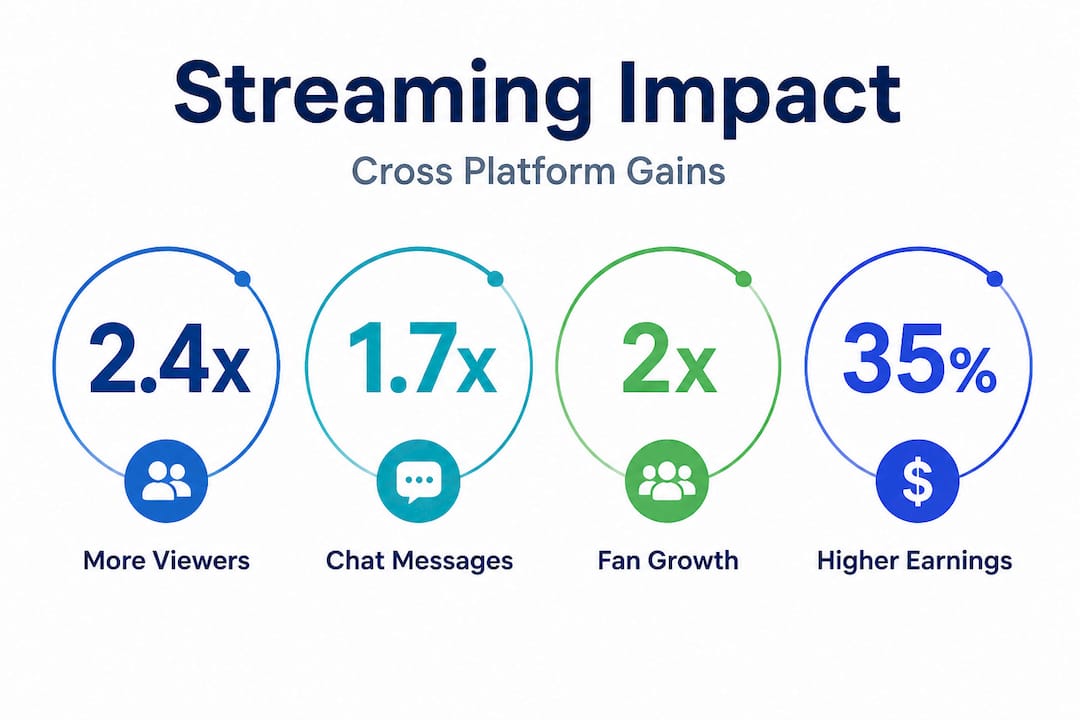
Here is a simple comparison of what single-platform versus cross-platform streaming typically looks like for a mid-size creator:
| Metric | Single platform | Cross platform |
|---|---|---|
| Unique live viewers per session | 200 | 480 |
| Average chat messages per stream | 150 | 340 |
| Monthly subscriber growth | 80 | 210 |
| Potential ad and tip revenue | $80 | $195 |
These numbers are illustrative, but they reflect the directional gains most creators see when they expand to multiple platforms with proper workflow tools in place.
Beyond viewer count, the live streaming benefits that matter most for creators include unified chat and analytics. When you manage engagement from a single dashboard instead of switching between browser tabs, you respond faster, miss fewer questions, and keep the energy consistent across all channels.
Centralized calls to action also matter. When you tell viewers to subscribe, join your Discord, or check out your merch link, that message goes out to all platforms at once. You are not repeating yourself or tailoring a CTA for each individual audience.
"Multi-platform distribution combined with unified engagement tools means creators can grow their audiences without proportionally growing their workload." — Stream to Multiple Platforms
The monetization paths available to you also multiply. Platform subscriptions, ad revenue, tips, and donations can come from any platform where you are live. One stream session can generate income from four different sources simultaneously.
Key workflow advantages include:
- No duplicate setup: Configure once, stream everywhere
- Unified chat moderation: One tool covers all incoming messages
- Single analytics view: See total viewer numbers and engagement without manual aggregation
- Consistent branding: Overlays, graphics, and CTAs stay the same across all streams
Simplicity vs. control: Choosing your cross platform workflow
Understanding the advantages is powerful, but the right workflow depends on how you want to balance simplicity and control.
There are two main approaches to cross platform streaming. Each one has real trade-offs. Choosing the wrong one early on can create unnecessary friction in your workflow.
Option 1: Managed multistreaming platforms
Services like Restream, Streamyard, or similar tools handle all the technical relay work for you. You log in, connect your accounts, and go live. The platform distributes your stream to every destination you have set up. This is fast to configure and requires very little technical knowledge.
The downside is dependency. If the service experiences an outage, all your streams go down at once. You also have less control over encoding settings, bitrate per destination, and latency management.
Option 2: DIY encoder or self-hosted relay
Advanced creators sometimes use OBS Studio with plugins, or set up a self-hosted RTMP (Real-Time Messaging Protocol) relay server to push streams to multiple destinations. This gives you deeper control over quality, latency, and failover behavior.
The trade-off is operational overhead. You need technical knowledge to configure this correctly, and troubleshooting issues during a live session can be stressful.
Creators should decide between simplicity and control based on their technical skills, audience size, and reliability needs. More control means more setup time and more potential failure points you are responsible for managing yourself.
| Factor | Managed platform | DIY setup |
|---|---|---|
| Setup complexity | Low | High |
| Monthly cost | $10 to $50+ | Variable (hosting fees) |
| Reliability | Platform-dependent | Self-managed |
| Encoding control | Limited | Full |
| Best for | Beginners to mid-level | Advanced or enterprise |
Use these steps to decide which option fits your situation:
- Assess your tech skills. If you struggle with OBS settings, start with a managed service.
- Estimate your budget. Managed platforms have predictable costs. DIY can scale in cost as your stream grows.
- Consider your audience size. Smaller audiences tolerate occasional disruptions. Large audiences demand higher reliability.
- Test before committing. Run a private test stream before going live publicly on any new workflow.
- Review platform requirements. Each platform has bitrate and resolution recommendations. Make sure your setup meets them all.
Following streaming best practices means checking these requirements ahead of time, not mid-stream.
Pro Tip: Beginners almost always benefit from starting with a managed multistreaming service. You can always migrate to a self-hosted setup later when you have a better understanding of your technical needs.
Common pitfalls and how to avoid them
Even with a path chosen, there are some common traps that can trip up experienced and new creators alike.
Cross platform streaming introduces new complexity. More platforms mean more potential points of failure, more chat to manage, and more consistency to maintain. Most creators who struggle do so because they underestimate this operational side.
Here are the most common mistakes and how to fix them:
-
Ignoring centralized chat. Reading chat on three or four platforms separately is exhausting and nearly impossible during active streams. Use a unified chat tool that pulls all messages into one view. This keeps you responsive and present for every viewer, regardless of which platform they are watching from.
-
Not setting up analytics properly. Streaming to multiple platforms and then only checking one platform's analytics misses the full picture. You need total viewer data, engagement rates, and peak concurrent viewers aggregated across all channels. Many multistreaming tools include this, or you can use a separate dashboard.
-
Inconsistent calls to action. If you tell YouTube viewers to "subscribe" but forget to mention it on Twitch, you leave growth on the table. Write your CTAs into your stream script or use on-screen overlays so the message goes out consistently.
-
Skipping pre-stream testing. Going live to multiple platforms without testing your relay setup first is risky. A failed stream on three platforms simultaneously is worse than a failed stream on one.
-
Overloading yourself too early. Adding five platforms at once creates management problems. Start with two or three, learn the workflow, then scale up.
Unified engagement workflows like centralized chat and analytics lower overhead compared to managing each platform individually. This is the single most important operational principle for cross platform streaming.
"The creators who grow fastest with multistreaming are the ones who build their engagement systems before they need them." — Stream to Multiple Platforms
Optimizing your stream workflow before expanding to multiple platforms prevents most of these issues from occurring in the first place. And setting up a proper interactive stream setup ensures your audience on every platform stays engaged, not just watching passively.
Pro Tip: Run a full dress rehearsal before your first cross platform stream. Go live privately, test chat on each platform, check analytics are recording, and confirm all overlays and CTAs appear correctly.
What most creators miss about cross platform streaming
Having covered tactics, it is worth looking at what actually separates high-performing streamers from those who plateau.
Most creators focus on the number of platforms they stream to. They treat cross platform streaming as a growth hack based on volume: more platforms equals more viewers. That logic is not wrong, but it misses the deeper opportunity.
The real advantage is faster learning. When you stream to multiple platforms at once, you are running a live experiment. You can see which platform's audience responds best to certain content types, which community grows more loyal, and where your highest-converting viewers actually come from. That data is valuable. It tells you where to invest your energy long-term.
Many creators discover that their most engaged fans are on a platform they almost ignored. A gaming streamer might find that their VexioTV audience, while smaller in total number, watches longer, tips more, and joins their Discord at a higher rate than viewers from larger platforms. That kind of information changes your strategy in a meaningful way.
The best creators use multistreaming not to spread thin across every platform but to run a discovery process. They identify where their real community lives, then they double down on community building via social streaming on that platform while maintaining presence elsewhere.
Cross platform streaming is not a permanent strategy for all platforms equally. It is a research tool that reveals your best platform, and then it becomes a retention and reach tool that keeps you visible everywhere while you concentrate your community-building energy where it matters most.
Creators who understand this use their multistreaming data actively. They review analytics after every session, look for patterns, and make adjustments. Those who treat it as "set it and forget it" see modest gains. Those who use the data see compounding growth.
Try cross platform streaming with ease
Ready to simplify your streaming workflow and connect with more fans? Getting started does not require advanced technical skills or expensive equipment.
VexioTV gives creators a straightforward platform to go live, build community, and earn from their streams. Whether you stream gaming, music, or any live entertainment, VexioTV is built for creators who want real engagement without unnecessary complexity. Sign up, connect your accounts, and go live with one click. The platform is designed to work alongside your cross platform strategy, giving you a reliable destination that prioritizes creator monetization and viewer interaction. Visit VexioTV to start your cross platform streaming journey with a platform that keeps things simple and focused on growth.
Frequently asked questions
Does cross platform streaming hurt my performance on Twitch or YouTube?
Cross platform streaming typically does not hurt your performance as long as you follow each platform's community guidelines and keep your content engaging for all audiences. Some platforms have rules about exclusive content, so review their terms before going live everywhere.
Can I read and reply to all audience chats in one place when streaming everywhere?
Yes, many multistreaming tools offer unified chat features so you can interact with all your audiences from one dashboard. Unified chat workflows lower the overhead of managing each platform's chat separately and keep your engagement consistent.
Is cross platform streaming suitable for musicians as well as gamers?
Absolutely. Musicians, educators, artists, and any live content creator can benefit from reaching fans across multiple platforms simultaneously. The workflow and tools are the same regardless of your content type.
What do I need to start cross platform streaming?
You need live streaming software or a managed multistreaming service that supports your target platforms, a stable internet connection, and basic streaming hardware like a webcam or capture card. A managed service is the fastest way to get started without technical setup.
How can I measure my cross platform success?
Use unified analytics to track viewer numbers, engagement rates, and conversions across all platforms in one place. Multi-platform analytics help creators increase unique viewers and reduce effort by showing where real growth is happening so you can focus your energy accordingly.