
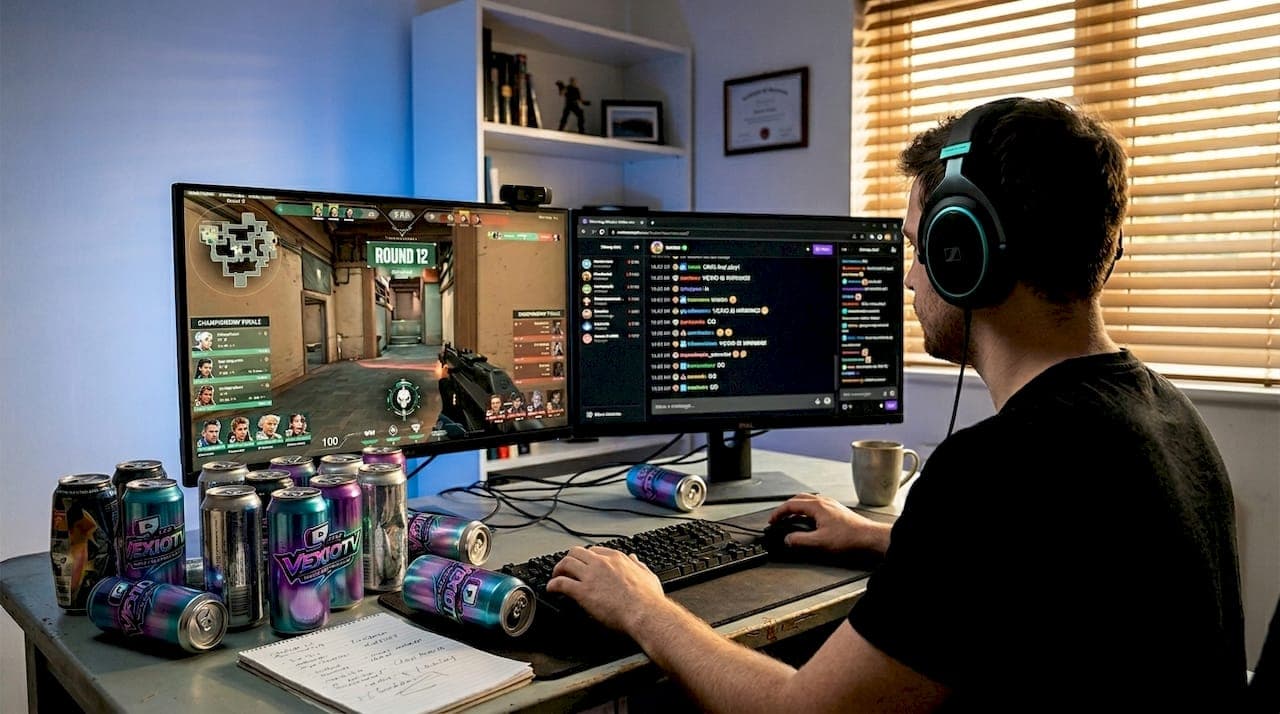
TL;DR:
- Esports streaming involves live broadcasts of competitive gaming with structured tournaments and active community engagement.
- Building loyal communities and authentic interactions are key to sustainable growth and monetization.
- Success relies more on consistent, genuine engagement than high-end production or game popularity.
Esports streaming is not just about watching people play games. It is a fully developed ecosystem where creators build real communities, viewers become loyal regulars, and revenue flows through multiple channels. Many people still treat it as a niche hobby, but the numbers and the creator success stories say otherwise. This guide breaks down exactly what esports streaming is, where it happens, how community engagement drives growth, and how you can use it as a serious revenue source. Whether you are a new streamer or a seasoned creator, the information here applies directly to your goals.
Table of Contents
- What is esports streaming?
- Popular platforms for esports streaming
- Community engagement: The foundation of esports streaming
- Monetization: How creators and platforms earn from esports streaming
- Esports streaming vs. other live streaming: Key differences
- What most creators miss about esports streaming success
- Level up your esports streaming game with VexioTV
- Frequently asked questions
Key Takeaways
| Point | Details |
|---|---|
| Esports streaming defined | It’s the live broadcast of competitive gaming, commentary, and community content through platforms like Twitch or YouTube. |
| Community comes first | Strong audience engagement and real-time interaction boost retention and revenue potential. |
| Monetization strategies | Creators can earn from subscriptions, ads, sponsorships, and direct support, though tracking success is complex. |
| Platform choice matters | Major platforms like Twitch and YouTube differ in tools, reach, and community focus for esports streamers. |
| Best practices for creators | Focusing on authentic engagement, feedback, and creative formats makes streamers stand out. |
What is esports streaming?
Esports streaming is the live online broadcast of competitive gaming, including tournaments, team matches, commentary, and analysis. It is not the same as casual gaming content. According to Britannica, esports streaming refers to broadcasting esports competitions and related commentary, analysis, and community content over live stream platforms like Twitch and YouTube, typically tied to organized leagues and tournaments, often with monetary prizes.
That distinction matters. Organized events give esports streams a structure that casual gaming streams usually lack. Viewers tune in knowing something is at stake. Matches have stakes, brackets, winners, and narratives.
Key features of esports streaming include:
- Live competitive matches from games like League of Legends, Valorant, Counter-Strike, and Dota 2
- Interactive tools such as real-time chat, polls, and emotes that keep viewers engaged
- Professional commentary and analysis that adds context and depth
- Structured tournaments and leagues with clear schedules and stakes
- Monetary prizes that elevate the status of competitors and attract larger audiences
Building live streaming communities around organized events creates repeat viewers. People come back for the next match, the next tournament, the next update. That loyalty is the foundation of both audience growth and monetization.
"Esports streaming is not just entertainment. It is a structured broadcast format with community at its center, designed to keep viewers engaged across multiple events and seasons."
With the basics established, let's look at why esports streaming platforms have become the go-to for fans and creators alike.
Popular platforms for esports streaming
Not all platforms serve esports audiences equally. Where you stream affects your discoverability, your monetization options, and your community norms. Twitch and YouTube lead global watch-time share for esports viewing, but other platforms are growing quickly.
Here is a direct comparison of the main platforms:
| Platform | Strengths | Weaknesses |
|---|---|---|
| Twitch | Large gaming audience, strong community tools, clip culture | Crowded market, harder discoverability for new creators |
| YouTube | Massive reach, integrated VOD, searchable content | Less real-time culture, chat less active than Twitch |
| Facebook Gaming | Social sharing, mobile-friendly | Smaller esports-specific audience |
| Trovo | Growing niche community, lower competition | Smaller total audience |
Twitch is the dominant platform for live esports viewing. Its chat culture, sub system, and gaming-first identity give it an edge for real-time events. YouTube benefits from its search engine, making recorded streams and highlights accessible long after the event ends.

Understanding streaming's impact on gaming culture helps you see why platform choice connects directly to community expectations. Twitch viewers expect active chat and interactive moments. YouTube viewers often prefer polished, well-edited content.
Smaller platforms like Trovo and Facebook Gaming offer less competition. That means new creators have a better chance of getting discovered. The tradeoff is a smaller potential audience.
Pro Tip: Start on the platform where your target game already has an active audience. If you play Valorant, Twitch is where most of the community lives. If you focus on analysis or educational content, YouTube's searchability gives you a long-term advantage.
The streaming genres driving viewership show that esports sits at the top of engagement metrics. Viewers stay longer and interact more during competitive events than during casual gaming streams.
Understanding where esports streaming happens is key, but what truly connects platforms and viewers is the sense of community.
Community engagement: The foundation of esports streaming
Community is not a side benefit of esports streaming. It is the core product. Viewers who feel connected to a streamer or a group of regulars come back consistently, spend more, and promote the channel to others.
Britannica defines esports streaming as broadcasting that includes community content alongside competitive matches. That means the interaction between streamer and audience is part of what makes the format work.
Real-time community tools that drive engagement include:
- Live chat where viewers comment, react, and interact during matches
- Polls and predictions that let viewers guess match outcomes
- Emotes and channel points that reward viewer loyalty
- Watch parties where creators react alongside their community
- Moderation systems that keep the environment welcoming and on-topic
The role of chat in streams is well documented. Active chat keeps viewers in the stream longer and creates a feedback loop where engagement attracts more engagement.
"A stream with 200 highly engaged viewers is more valuable than a stream with 2,000 passive ones. Revenue and loyalty both follow engagement, not raw numbers."
Creators who invest in moderation see measurable benefits. A clean, welcoming chat keeps new viewers from leaving. It also encourages regulars to participate more openly. Building interactive stream setups that use overlays, alerts, and chat commands can increase interaction rates significantly.
Strong communities also form the economic backbone of a channel. Subscribers who feel part of something are more likely to maintain their subscriptions, send donations, and buy merchandise. Following streaming best practices helps creators build these communities systematically rather than by accident.
Pro Tip: Set community guidelines on day one and enforce them consistently. Viewers learn quickly what kind of space your stream is. A clear, positive environment attracts the audience that will stick around and support you.
Now that we've seen the importance of community, let's explore how streaming can translate into real revenue, plus the challenges creators face.
Monetization: How creators and platforms earn from esports streaming
Esports streaming generates revenue in several ways. Understanding each channel helps creators plan realistically. According to eMarketer, esports streaming is monetized through subscriptions, advertising, sponsorships and brand partnerships, and direct fan support, though measurement and attribution remain more complex than in traditional sports.
The main revenue channels for esports streamers:
- Subscriptions: Viewers pay monthly to support the channel, often getting ad-free viewing and exclusive emotes in return.
- Advertising: Pre-roll and mid-roll ads run during streams, generating revenue based on viewer counts and ad rates.
- Brand sponsorships: Companies pay creators to promote products or services, often through dedicated segments, overlays, or shoutouts.
- Merchandise: Custom apparel, accessories, and digital items sold to the community.
- Direct fan support: One-time donations or tips sent through the platform or third-party tools.
Here is how these revenue streams compare in terms of stability and scale:
| Revenue Stream | Stability | Scaling Potential | Setup Complexity |
|---|---|---|---|
| Subscriptions | High | Medium | Low |
| Advertising | Medium | High | Low |
| Brand sponsorships | Low to Medium | Very High | Medium to High |
| Merchandise | Medium | High | High |
| Direct fan support | Low | Medium | Low |
Subscriptions provide the most predictable income. Brand sponsorships offer the highest earning potential but require an established audience and clear engagement metrics.
Attribution is a real challenge. Platform growth insights show that many creators struggle to prove exactly how many sales a sponsorship generated. Using promo codes, unique landing page links, and post-stream surveys gives sponsors verifiable data. This makes you more attractive to brands and opens the door to long-term partnerships.
IRL streaming revenue tips also apply to esports channels. Diversifying beyond one revenue stream protects creators when any single channel underperforms.
Let's take a closer look at what makes esports streaming unique compared to other streaming genres and why measuring success takes a different approach.
Esports streaming vs. other live streaming: Key differences
Esports streaming has a distinct structure that separates it from general live content. Understanding those differences helps you position your content and set realistic expectations.
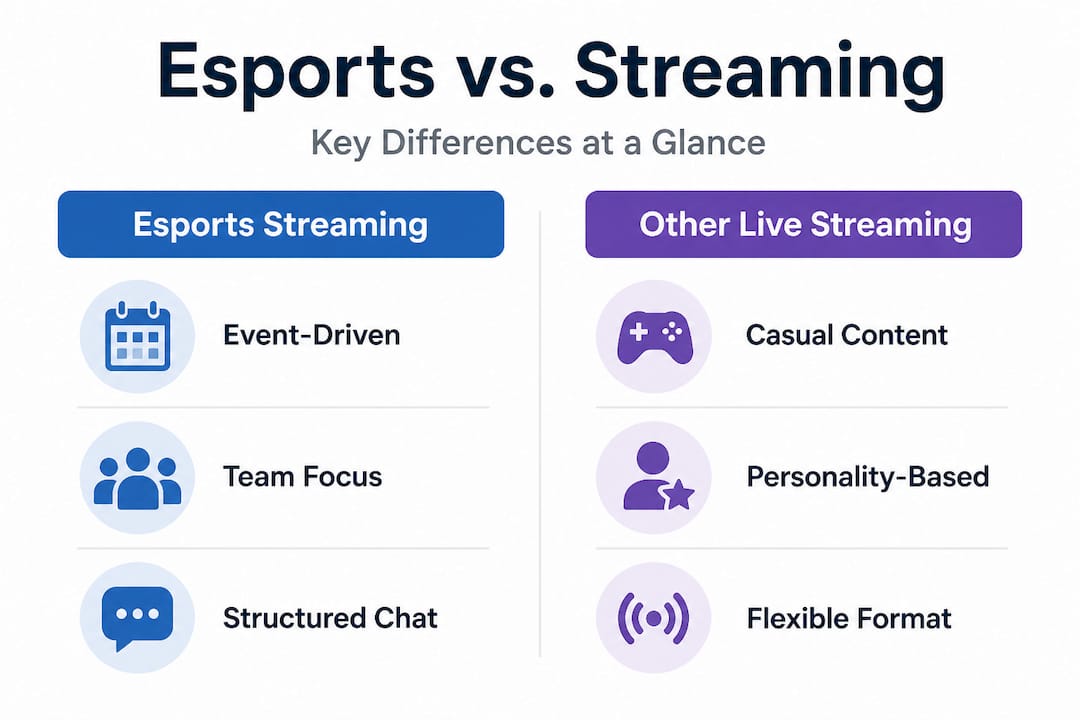
| Feature | Esports Streaming | Other Live Streaming (IRL, Music, Talk) |
|---|---|---|
| Content structure | Event-driven, scheduled matches | Personality-driven, open format |
| Viewer motivation | Watching competition, community | Entertainment, connection to creator |
| Scheduling | Tied to tournaments and leagues | Flexible, creator-controlled |
| Measurement | Event-based metrics, viewership peaks | Ongoing engagement, average viewers |
| Brand partnership complexity | High (attribution needed) | Medium |
Streaming entertainment trends confirm that structured content builds habitual viewing. People schedule time around tournament dates in the same way they would for a sports broadcast. That predictability benefits creators who can plan content around events.
Other streaming formats like IRL, music, or talk content rely more on the creator's personality and daily consistency. Those formats offer flexibility but lack the built-in audience hook that a major tournament provides.
The measurement gap is significant. eMarketer notes that while brands may view esports as straightforward exposure, attribution is often non-standard and harder to track than in traditional sports. This makes creator partnerships and tracking mechanisms like promo codes especially important for revenue-focused channels.
Understanding platform reach and revenue across different content types shows that esports streams generate strong peak viewership but require deliberate tracking to convert that viewership into measurable brand value.
Key advantages esports streaming has over other formats:
- Built-in event schedules provide automatic content hooks
- Competitive stakes create higher emotional investment from viewers
- Established game titles bring existing fanbases to new streamers
- Community tools designed for gaming create richer viewer interaction
With a solid understanding of esports streaming and its nuances, let's wrap up with expert lessons for creators aiming to break in or excel.
What most creators miss about esports streaming success
Here is what experience in this space consistently shows: most creators who struggle are focused on the wrong things. They spend money on high-end production setups or chase the most popular game titles, expecting those factors to drive growth. They rarely do.
The biggest driver of sustainable growth in esports streaming is consistent, authentic interaction. Viewers follow creators they feel connected to. A streamer with a modest setup who responds to chat, remembers regulars, and reacts genuinely to match moments will outperform a polished broadcast with no personality behind it.
Small, loyal audiences drive more reliable revenue than large, passive ones. A channel with 500 dedicated subscribers generates more stable income than one with 5,000 casual viewers who rarely engage. Building strong streaming communities from the start, even at small scale, sets the foundation for long-term revenue.
Analytics from chat and community tools are underused. Most platforms give creators data on what moments spike viewer counts, when people leave, and which segments drive the most chat activity. Use that data. If viewers consistently engage during post-match analysis but drop off during pre-game setup, adjust your format accordingly.
Creators who stand out experiment with formats. Co-streaming alongside a friend, running behind-the-scenes content during off-tournament weeks, or offering mentoring streams for newer players in the game creates variety that keeps regulars coming back. These formats also generate clips and short-form content for other platforms.
On the measurement side, set up your own tracking from day one. Do not rely on platform dashboards alone. Use unique promo codes for sponsorships, track Discord member growth alongside viewer counts, and run occasional polls to understand what your audience values. This data makes you a stronger partner for brands and keeps you informed about what is working.
Level up your esports streaming game with VexioTV
Ready to apply your esports streaming knowledge? VexioTV is built for creators who want to go live without friction. The platform gives gamers and content creators a space to stream, build community, and earn, all from one place.
VexioTV offers an easy one-click Go Live setup, community tools designed for real-time interaction, and integrated monetization options so you can start earning from your audience directly. Whether you are streaming competitive matches, providing commentary, or building a loyal viewer base around your gaming content, VexioTV gives you the tools to do it. Sign up at VexioTV and start streaming today. The setup is straightforward, the community is growing, and the earning opportunities are real.
Frequently asked questions
What equipment do I need to start esports streaming?
You typically need a PC or console, a stable internet connection, streaming software such as OBS, and a microphone or webcam to engage your audience. Better equipment helps, but consistent content and interaction matter more than high-end gear when starting out.
How do esports streamers make money?
Streamers earn through subscriptions, advertising, sponsorships, and direct fan support like donations. Building multiple revenue streams from early on reduces dependence on any single channel.
Which platforms are most popular for esports streaming?
Twitch and YouTube lead in global esports viewership and are the preferred starting points for most creators. Facebook Gaming and Trovo serve smaller but growing audiences.
What makes esports streaming different from other live streams?
Esports streams center on competitive events with structured schedules and focus heavily on community engagement built around specific tournaments and game titles. Other live stream formats rely more on creator personality and flexible scheduling.
How can I grow my audience as a new esports streamer?
Focus on consistent interaction, respond to chat actively, and stream on a regular schedule tied to game events or tournaments. Using community tools like polls and predictions gives viewers a reason to stay engaged beyond just watching the match.