

TL;DR:
- Building engaged communities, rather than chasing follower counts, leads to more stable income and loyalty in streaming. Micro-communities focused on participation, feedback, and shared rituals outperform large passive audiences by fostering trust and retention. Tailoring platform strategies and consistent engagement practices are essential for long-term community growth and monetization.
Most streamers obsess over follower counts. The assumption is simple: more followers equals more success. That assumption is wrong. Creators with smaller, highly engaged communities consistently generate more stable income and stronger viewer loyalty than those chasing raw numbers. Understanding how community works, and how it differs from a passive audience, is the most practical step you can take toward sustainable streaming growth. This article covers why community is the real driver of streaming success, which frameworks work best, and how to turn that community into consistent revenue.
Table of Contents
- Why community matters more than numbers in streaming
- Micro-communities and participatory models: frameworks that work
- Platform strategies and evolving community norms
- Practical steps: activating and monetizing your streaming community
- The overlooked truth: why real community isn't what most streamers expect
- Grow and monetize your streaming community with VexioTV
- Frequently asked questions
Key Takeaways
| Point | Details |
|---|---|
| Community beats audience size | Tight-knit communities drive more engagement and steady revenue than large passive audiences. |
| Micro-communities boost value | Small groups with meaningful participation enable repeat offers and higher support. |
| Platform choice matters | Strategic use of Twitch, YouTube, and Discord determines how communities convert to revenue. |
| Monetization needs engagement | Recurring income comes from harnessing community interaction, not just streaming events. |
| Track engagement, not views | Measuring sentiment and active participation is better than focusing on follower count alone. |
Why community matters more than numbers in streaming
There is a difference between an audience and a community. An audience watches. A community participates. Audiences are passive. Communities give feedback, share streams, buy memberships, and return consistently. That distinction shapes everything from retention rates to monthly income.
Creators who focus on streaming communities explained understand this early. A channel with 500 loyal, vocal viewers will often outperform one with 10,000 casual followers. The engaged viewers show up every stream, interact in chat, and convert on membership offers. The casual followers scroll past.
The numbers support this direction. YouTube Gaming reached 8.8B hours watched in 2025, a 12% year-over-year jump from 2024. That kind of sustained watchtime growth is driven by repeat viewers, not one-time clicks. Repeat viewers are community members.
"YouTube Gaming reached 8.8B hours watched in 2025, a 12% YoY jump from 2024."
Communities also generate better data. When viewers talk in chat, send messages, and respond to polls, they tell you exactly what they want. That feedback loop is more useful than any analytics dashboard. You can use it to shape content, refine offers, and improve retention.
Here is how communities drive results that raw audiences cannot:
- Retention: Community members return stream after stream, keeping your average viewer numbers stable.
- Feedback: Active participants share opinions that help you improve your content and format.
- Direct support: Engaged viewers subscribe, donate, and buy limited offers at higher rates.
- Referrals: Community members recommend your channel to their networks, generating organic growth.
- Co-creation: Active communities suggest topics, participate in votes, and shape the direction of content.
The data is consistent. Boosting engagement through community-driven streaming leads to more stable income than chasing follower milestones.
Pro Tip: Track sentiment in your chat and note recurring themes. That qualitative data is more useful than follower count for predicting long-term growth.
| Metric | Passive audience | Engaged community |
|---|---|---|
| Return rate | Low | High |
| Conversion on offers | Low | High |
| Feedback quality | Minimal | Detailed |
| Referral potential | Low | Significant |
| Revenue stability | Inconsistent | Recurring |
With the difference between audiences and communities laid out, let us look at how different community engagement approaches directly shape streaming results.
Micro-communities and participatory models: frameworks that work
Micro-communities are small, tightly connected groups built around a specific creator, game, or niche. They do not require massive follower counts. They require intentional design and consistent participation. A micro-community of 200 active members can generate more revenue than a passive audience of 20,000.
The reasoning is straightforward. A micro-community approach in gaming streams is built around intimate participation, not broadcasting. Members feel seen and valued. That feeling drives purchasing behavior, word-of-mouth, and loyalty.
Effective micro-community strategies include tactics such as creator co-ops, limited drops tied to live events, and tiered offers aligned to stream moments. Key metrics like sentiment-to-roadmap conversion and repeat-drop conversion rate are more reliable indicators of community health than total viewer numbers.
Here is how to build and maintain a micro-community that generates real results:
- Define your niche clearly. A micro-community needs a shared identity. Pick a specific game, topic, or personality and commit to it. Broad does not build community.
- Set a communication rhythm. Stream on a consistent schedule. Community members plan around your streams when they trust you will show up.
- Create exclusive touchpoints. Private Discord channels, member-only polls, and early access content give community members something the general audience does not get.
- Introduce tiered offers. Segment your community by engagement level. Offer different benefits to casual viewers, regular attendees, and core supporters.
- Run limited drops during live moments. When you hit a milestone, release a limited item or offer exclusively during the stream. This creates urgency tied to real-time participation.
- Ask for feedback and act on it. Post a poll, read the responses, and then visibly change something based on the results. This shows members their input matters.
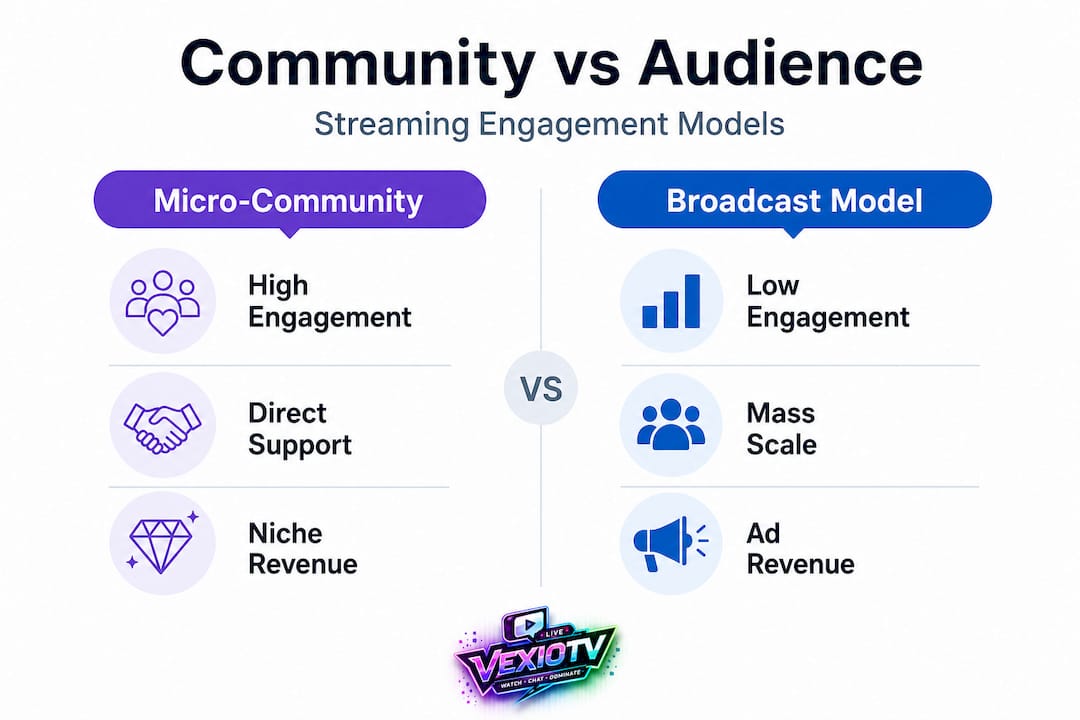
| Feature | Micro-community model | Broadcast model |
|---|---|---|
| Engagement level | High | Low |
| Monetization path | Direct, tiered offers | Ads and sponsorships |
| Retention rate | High | Low |
| Feedback loop | Active and actionable | Minimal |
| Audience size needed | Small to medium | Large |
| Revenue predictability | High | Inconsistent |
The comparison is clear. Broadcast models require scale to generate revenue. Micro-community models generate revenue from participation. For most creators, the micro-community path is more achievable and more stable. Building social streaming around community is not a shortcut. It is a more direct route.
Pro Tip: Measure sentiment-to-roadmap conversion, meaning how often community feedback results in a content or product change. That metric tells you whether your community feels heard and whether they trust you to listen.
Now that you are equipped with proven micro-community strategies, it is time to see how different platforms and cultural trends impact these approaches.
Platform strategies and evolving community norms
Not all platforms treat community the same way. Each platform has its own culture, monetization structure, and expectations. A strategy that works on one platform can fail on another. Understanding these differences helps you make better decisions about where to invest your time.
Here is a breakdown of how major platforms approach community:
- Discord: Deep community interaction, private channels, roles, and direct messaging. Best for building the inner layer of your community. Weak for public discovery.
- Twitch: Real-time interaction built into the experience. Subscriptions, Bits, and channel points create direct monetization. Strong always-on culture.
- YouTube: Long-form and live content in one place. Memberships, Super Chats, and algorithmic reach make it strong for both discovery and community monetization.
- Patreon: Subscription-first model with tiered benefits. Best for creators whose community values exclusive content and direct creator access.
- Substack: Newsletter-based community building. Best for creators who complement streaming with written content and deeper analysis.
Platform norms shape streaming behavior in ways that creators often underestimate. Creators and platforms disagree on whether livestreaming functions as an always-on relationship builder or just an occasional add-on. Ecosystem fragmentation changes expectations for monetization and community norms across every platform.
"Some creators treat livestreaming as always-on, while others use it as an occasional way to deepen existing relationships. The result is a fractured ecosystem with no universal standard for community or monetization."
Understanding always-on versus occasional streaming matters because it shapes how your audience expects to interact with you. Always-on communities expect daily or near-daily presence. Event-based communities show up for specific moments and are content with less frequent streams.
Neither model is wrong. But choosing the wrong model for your platform and audience creates friction. A Twitch audience expects presence. A Patreon audience expects depth. Matching your approach to platform norms increases your chance of building a stable community.
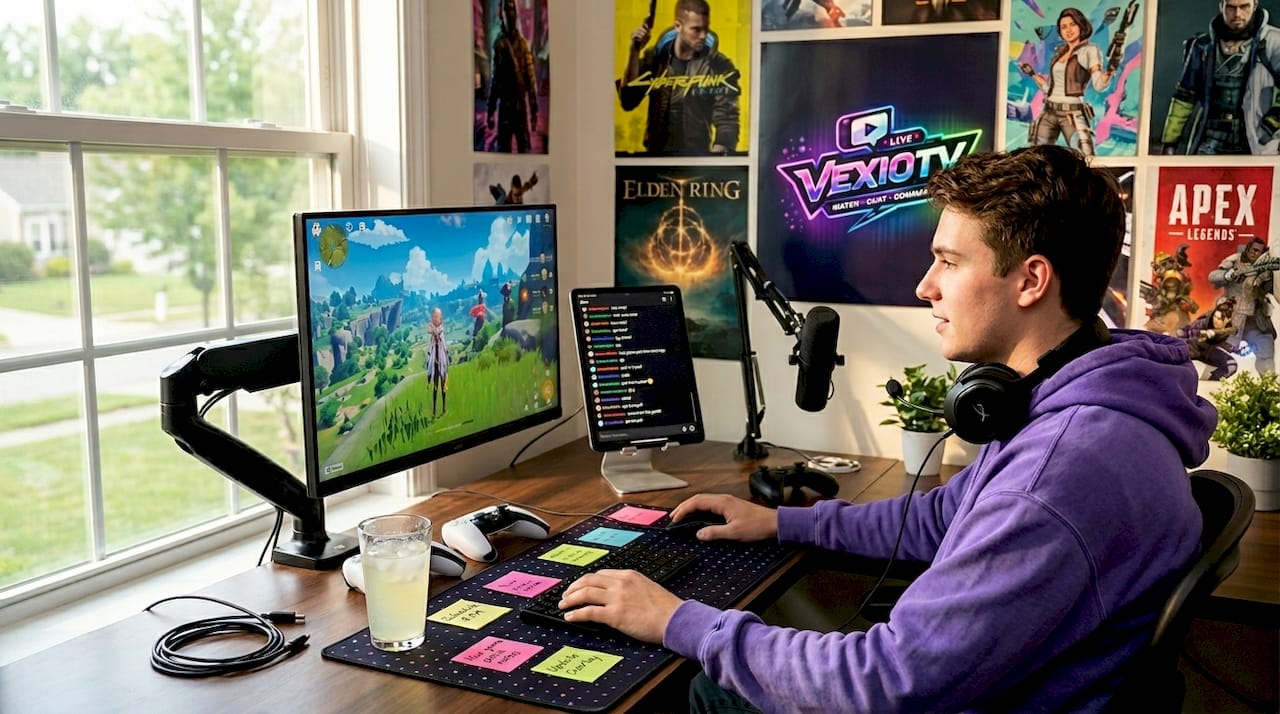
Chat plays a direct role in community building across all platforms. An active chat tells the algorithm your content is engaging. It also gives you real-time feedback and makes viewers feel part of the experience. Prioritize chat interaction in every stream.
Acknowledging these platform distinctions, let us focus on actionable steps to activate, monetize, and sustain your streaming community.
Practical steps: activating and monetizing your streaming community
Strategy is only useful when it leads to action. Here is a step-by-step plan for turning community engagement into recurring revenue.
- Set up a Discord server as your community hub. Create channels for general chat, game-specific discussion, feedback, and exclusive member content. Name the server after your brand.
- Link your Discord to your live streams. Post stream announcements in Discord. Share highlights after streams end. Keep members connected between streams.
- Segment your audience by engagement. Assign Discord roles based on activity. Give more active members access to exclusive channels and early offers.
- Launch tiered memberships. Offer three levels. A basic tier gives access to the Discord server and stream notifications. A mid tier adds member-only streams or Q&A sessions. A top tier includes direct access, shoutouts, or co-creation opportunities.
- Run limited drop events tied to live moments. Announce during a stream that a limited offer, a custom role, a discount, or exclusive content, is available for the next 24 hours. Viewers who are watching live get first access.
- Track active participation, not just viewer numbers. Measure chat messages per stream, Discord messages per week, and membership conversions. These numbers tell you whether your community is growing or stagnating.
- Run monthly community check-ins. Post a survey or poll asking members what they want more of. Use the results to adjust content and offers for the following month.
Discord is central for gamer community building, with live streams on streaming platforms functioning as visibility and conversion surfaces. Discord is where the relationship lives. The live stream is where new people discover you and existing members gather.
Membership tiers, micro-community offers, and limited drops are repeatable revenue structures. They do not require constant new content ideas. They require consistent execution and community trust.
Pro Tip: Run a repeat-drop event at least once per month. Set a clear time window, announce it during a live stream, and limit access to paying members or active community participants. Track the conversion rate and adjust the offer based on what sells.
Learn more about streaming monetization paths and creative approaches to monetizing live content to expand your revenue options beyond basic ads.
With an actionable blueprint in hand, let us shift to the underlying principles and real-world insight that many creators overlook about streaming communities.
The overlooked truth: why real community isn't what most streamers expect
Most streamers think community means hosting events, selling merch, or hitting a follower milestone. Those things can support a community. They do not create one.
Real community is built slowly. It comes from showing up consistently, listening to feedback, and giving members a reason to keep returning. That process takes months, not days. Creators who expect fast results from community-building often give up before the results arrive.
The more important point is this: platform strategy is inseparable from community strategy. Platform positioning shapes community outcomes in ways that many creators fail to account for. The same community-building behavior that works on an always-on platform can fail on an event-based one. Your community strategy must match the platform's culture.
Platform incentives also matter. Some platforms reward frequent streaming. Others reward content that drives click-through. When platform incentives push creators toward certain behaviors, those behaviors shape what community members expect. If the platform rewards novelty, your audience expects constant new content. If it rewards depth, they expect substance. Knowing what your platform rewards helps you manage expectations and build more effectively.
How streaming shaped gaming culture and community shows that the most durable communities grew around consistent rituals, shared language, and genuine creator responsiveness. Not around follower counts or viral moments.
The creators who build lasting careers focus on three things. First, they listen to their community regularly and visibly act on what they hear. Second, they create belonging through shared rituals, whether it is a specific stream segment, a recurring event, or a community inside joke. Third, they iterate slowly instead of chasing the latest trend or platform feature.
Flashy campaigns get attention. Consistent trust keeps people around.
Pro Tip: Build at least one recurring ritual into every stream. It could be a weekly challenge, a regular segment, or a community vote. Rituals create familiarity, and familiarity builds loyalty over time.
Grow and monetize your streaming community with VexioTV
Building a genuine community around your streams takes the right environment. VexioTV is designed for exactly that.
VexioTV gives creators a direct path from going live to building community and earning revenue. The platform supports gaming, music, IRL content, and creative performances, all in one place. You can go live with one click, engage your viewers in real time, and access monetization tools built for active community building. Whether you are starting out or scaling up, VexioTV provides the tools to put the strategies in this article into practice. Sign up at VexioTV and start building the community your streams deserve.
Frequently asked questions
What is the difference between an audience and a community in streaming?
An audience focuses on follower count and passive viewers. A community drives interaction, loyalty, and recurring revenue through active engagement. Micro-community strategies focus on intimate participation and measurable engagement signals, not raw follower numbers.
How do micro-communities help streamers earn more?
Micro-communities enable higher participation and more direct support, which increases conversions from limited offers and memberships. Repeatable revenue structures like membership tiers and limited drops perform better with engaged micro-communities than with large passive audiences.
What platform is best for community-based streaming?
Platforms like Discord excel at community interaction, while Twitch and YouTube offer wider visibility and monetization features when integrated together. Discord serves as the community hub, while live streaming platforms act as discovery and conversion surfaces.
What is an 'always-on' streaming community?
An always-on community is one where ongoing interaction and relationship-building continues outside of occasional big events or streams. Platform norms influence this expectation, with some platforms like Twitch favoring constant creator presence and others supporting more event-based models.
How do you measure real community success in streaming?
Measure community success with engagement metrics like sentiment shifts, referrals, active participation, and conversion rates, not just total views. Sentiment-to-roadmap conversion and referral velocity are more accurate indicators of community health than follower count alone.